


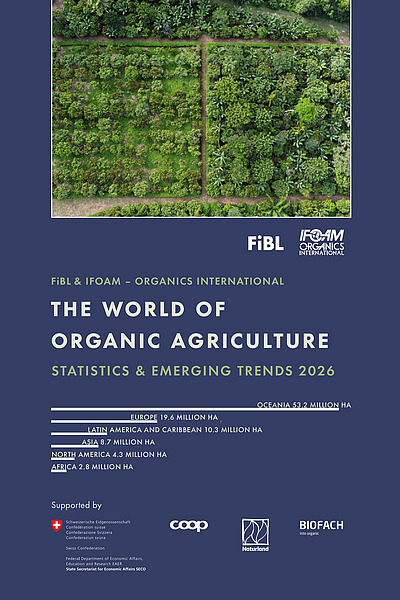
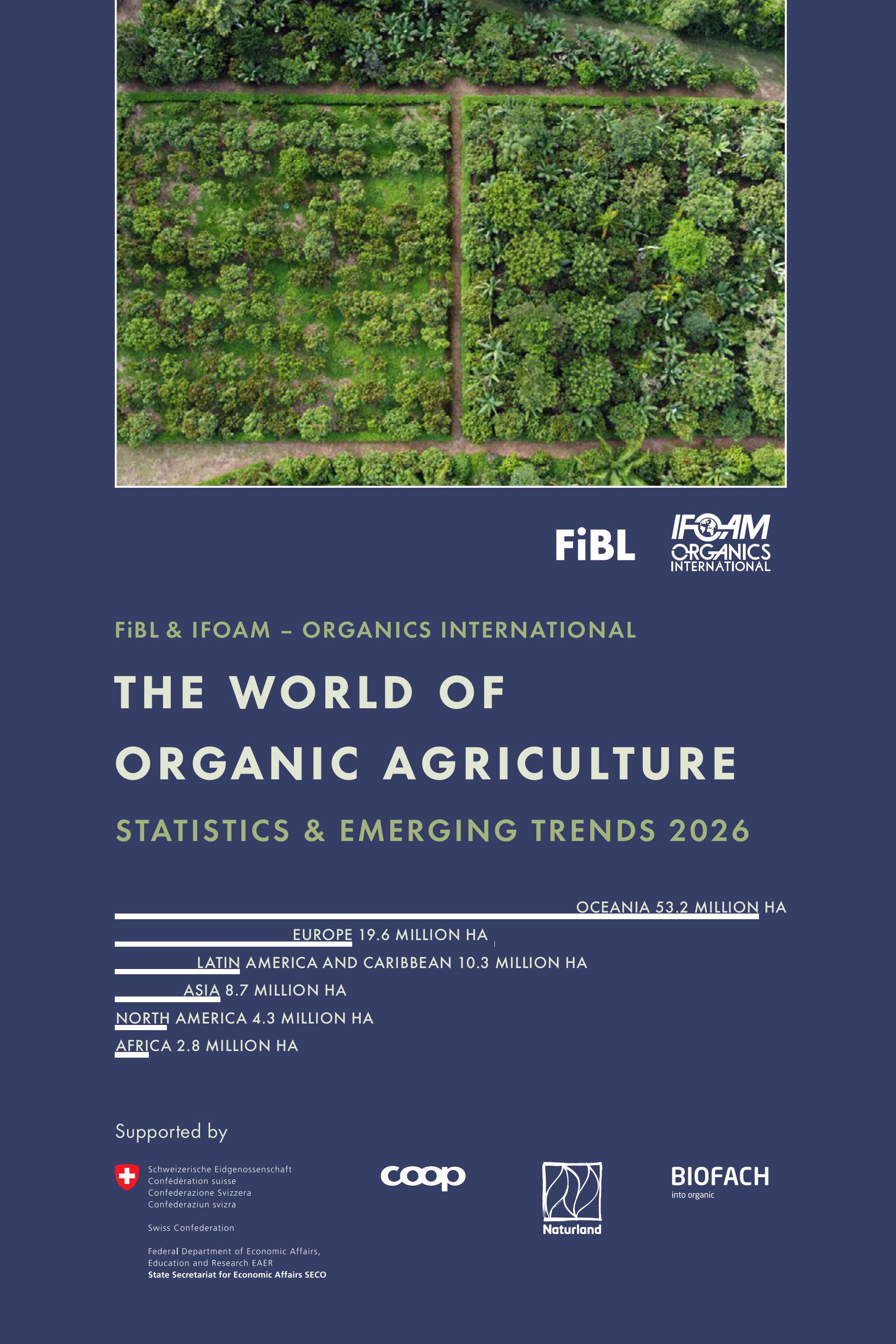
(Frick/Bonn, February 10, 2026) These latest statistics are published in"The World of Organic Agriculture: Statistics and Emerging Trends 2026" and will be presented by the Research Institute of Organic Agriculture FiBL and partners on February 10, 2026, from 5 to 6 pm at Biofach, the world's leading trade fair for organic food, held in Nuremberg, Germany.
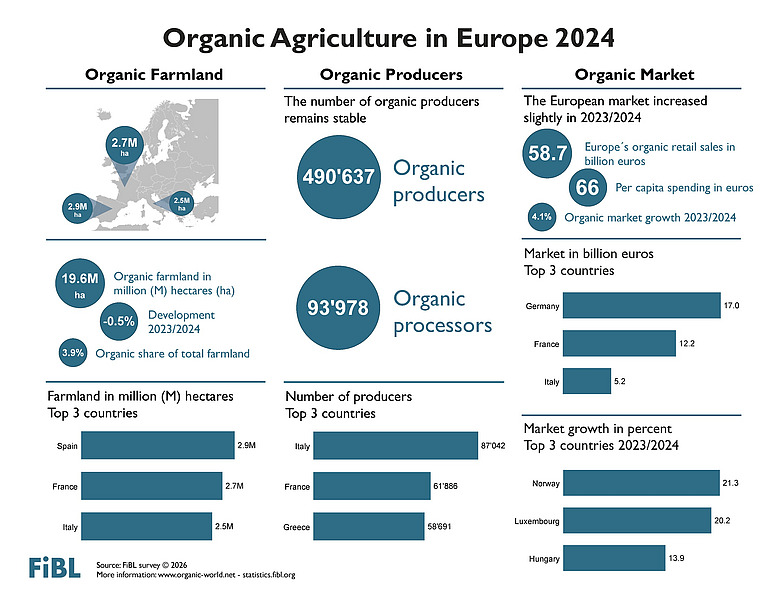
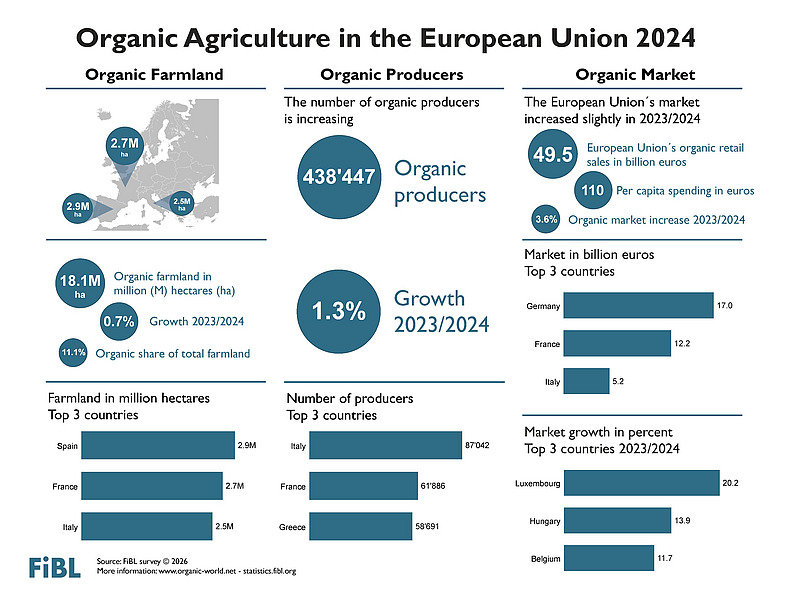
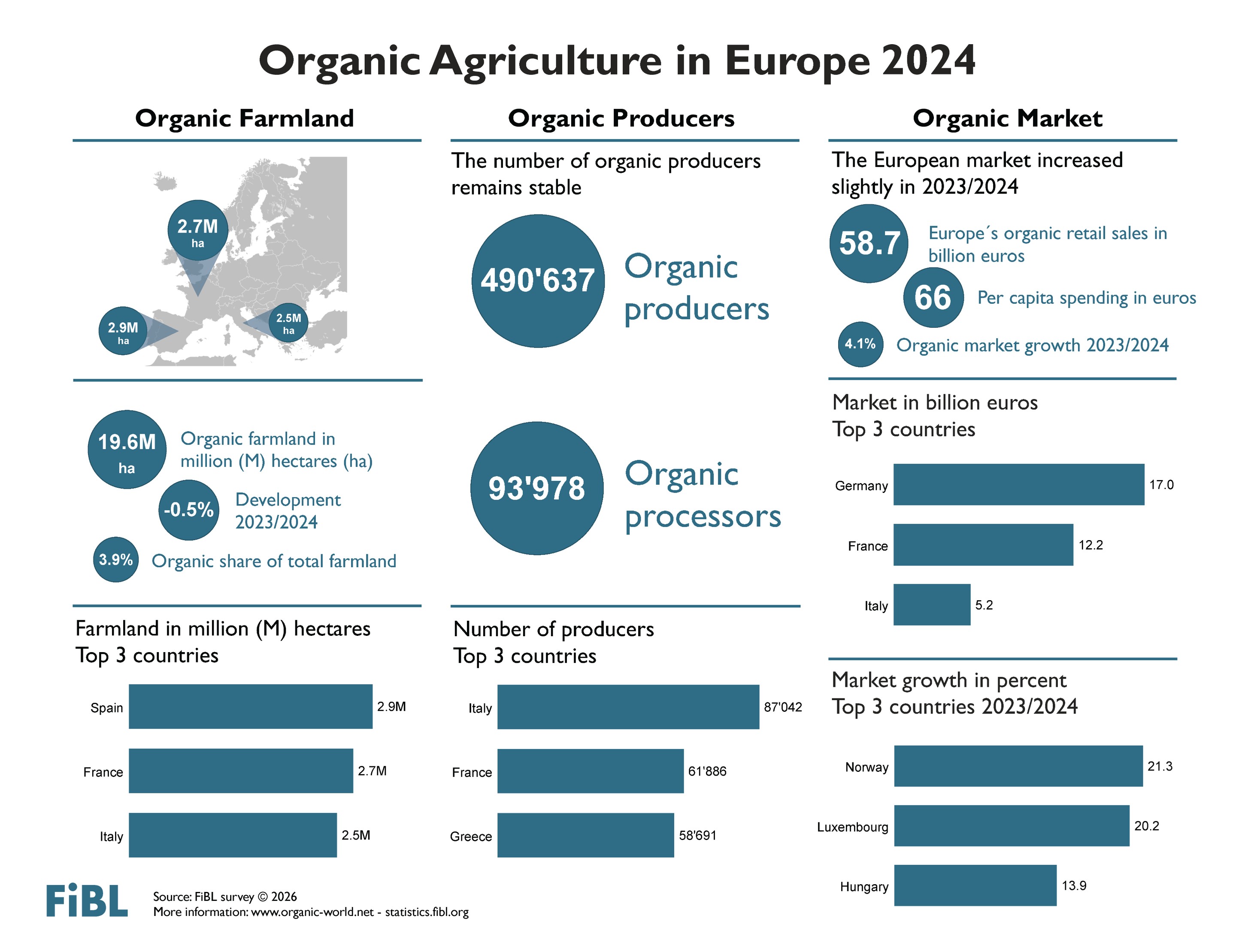
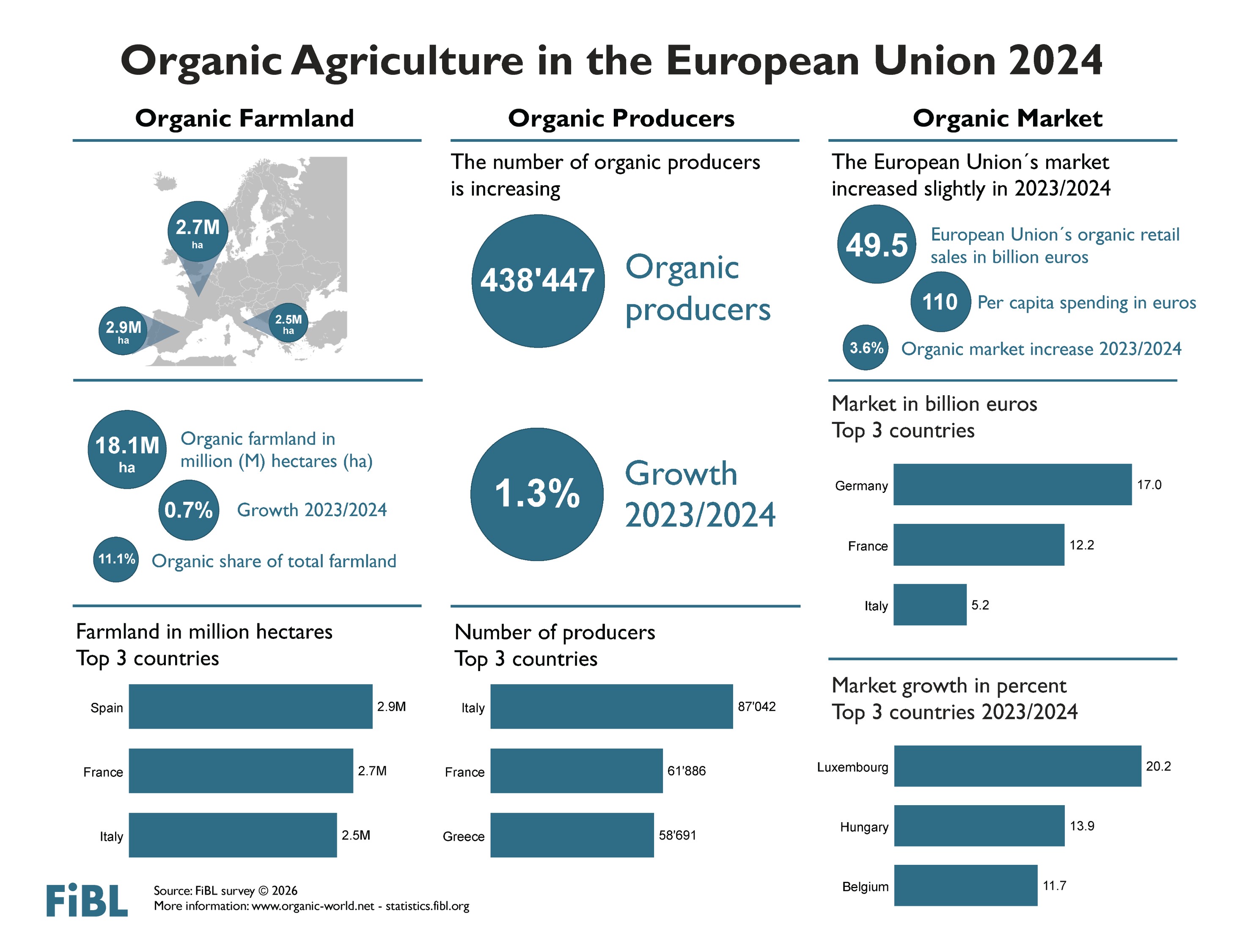
In 2024, Germany remained the largest organic market in Europe (17.0 billion euros), followed by France (12.2 billion euros) and Italy (5.2 billion euros). Europe's organic retail sales reached 58.7 billion euros (EU: 49.5 billion euros), increasing by 4.1 percent in Europe and 3.6 percent in the European Union. Switzerland recorded the highest per capita consumption worldwide at 481 euros per person and the highest organic market share worldwide at 12.3 percent of total food sales in 2024.
Organic farmland in Europe remained at 19.6 million hectares (EU: 18.1 million hectares), with an organic share of 3.9 percent in Europe and 11.1 percent in the EU. The countries with the largest organic agricultural areas in Europe were Spain (2.9 million hectares), France (2.7 million hectares) and Italy (2.5 million hectares). Liechtenstein continued to have the highest organic land share worldwide (43.5 percent).
International trade strengthened further. In 2024, the EU imported approximately 2.64 million metric tons of organic agri-food products, with the Netherlands, Germany and Belgium the largest importers by volume; Ecuador remained the leading supplier, and tropical fruit – especially bananas – dominated import volumes.
Further information
Contacts
- Helga Willer, Research Institute of Organic Agriculture FiBL, Switzerland
- Diana Schaack
Agricultural Market Information Company (AMI)
Dreizehnmorgenweg 10, 53175 Bonn, Germany
+49 228 33805-0
diana.schaack(at)ami-informiert.de, www.ami-informiert.de
Download, infographics and online databases
- organic-world.net: Download "The World of Organic Agriculture 2026"
- organic-world.net: Infographics
- statistics.fibl.org: FiBL statistics on organic agriculture worldwide
Links
- fibl.org: Website of the Research Institute of Organic Agriculture FiBL
- ami-informiert.de: Website of AMI, the Agricultural Market Information Company
- biofach.de: Website of BIOFACH
Session "The European Market for Organic Food" at the BIOFACH Congress
Tuesday, February 10, 2026, 5:00 to 6:00 pm CET, Room Shanghai (NCC East), Forum Biofach, BIOFACH Congress, NürnbergMesse
Speakers
- Marine Bré-Garnier, Agence Bio, France
- Lee Holdstock, Soil Association Certification, UK
- Dr. Susanne Padel, Facilitator, Germany
- Diana Schaack, AMI Agricultural Market Information Company, Germany
- Prof. Dr. Francesco Solfanelli, Università Politecnica delle Marche, Italy
- Jan Trávníček, Czech Organics, Czech Republic
- Dr. Helga Willer, Research Institute of Organic Agriculture FiBL, Switzerland
- Prof. Dr. Raffaele Zanoli, Università Politecnica delle Marche, Italy
biofach.fibl.org: Info
Acknowledgements
The European data collection was conducted within the framework of the OrganicTargets4EU project, funded by the European Union (Grant No. 101060368) and the Swiss State Secretariat for Education, Research and Innovation (SERI) (Grant No. 22.00155). The work presented here is part of the global survey on organic agriculture, supported by the Swiss State Secretariat for Economic Affairs, the Coop Sustainability Fund, Naturland e.V., and NürnbergMesse/Biofach. The views and opinions expressed in this media release do not necessarily reflect those of the aforementioned supporters.