


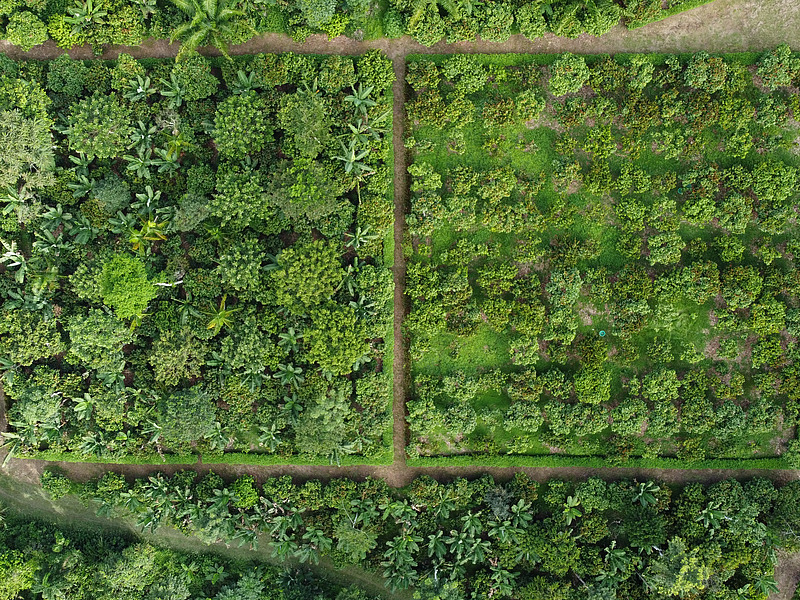

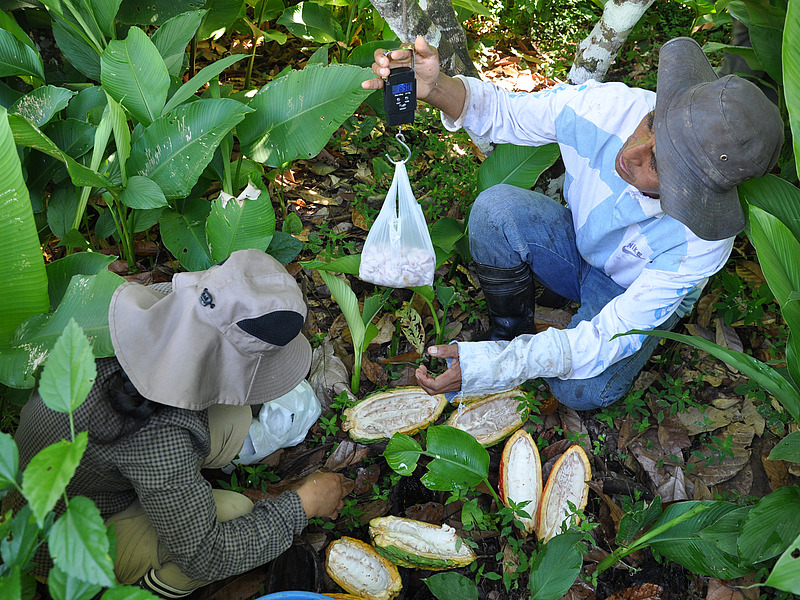


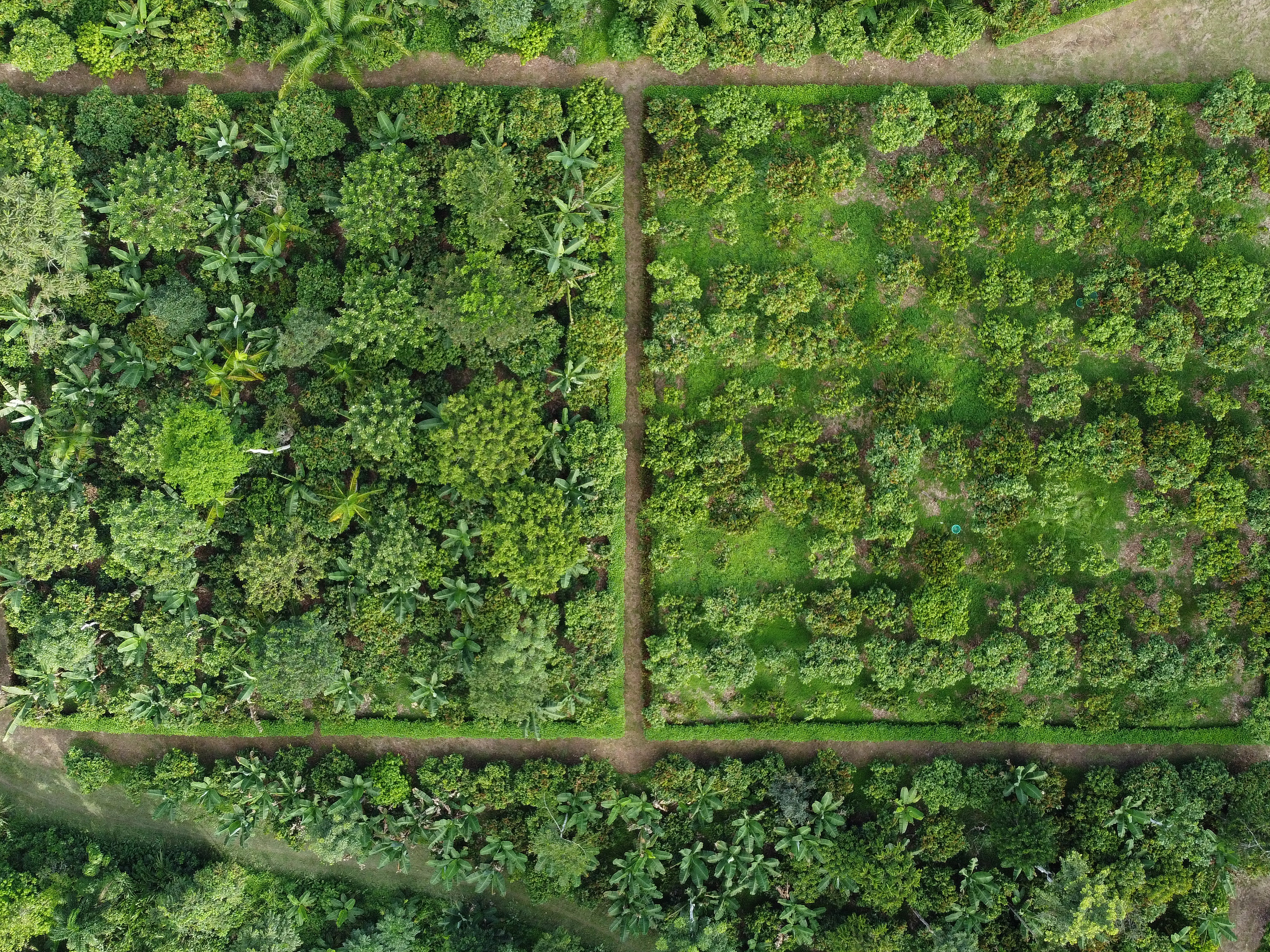

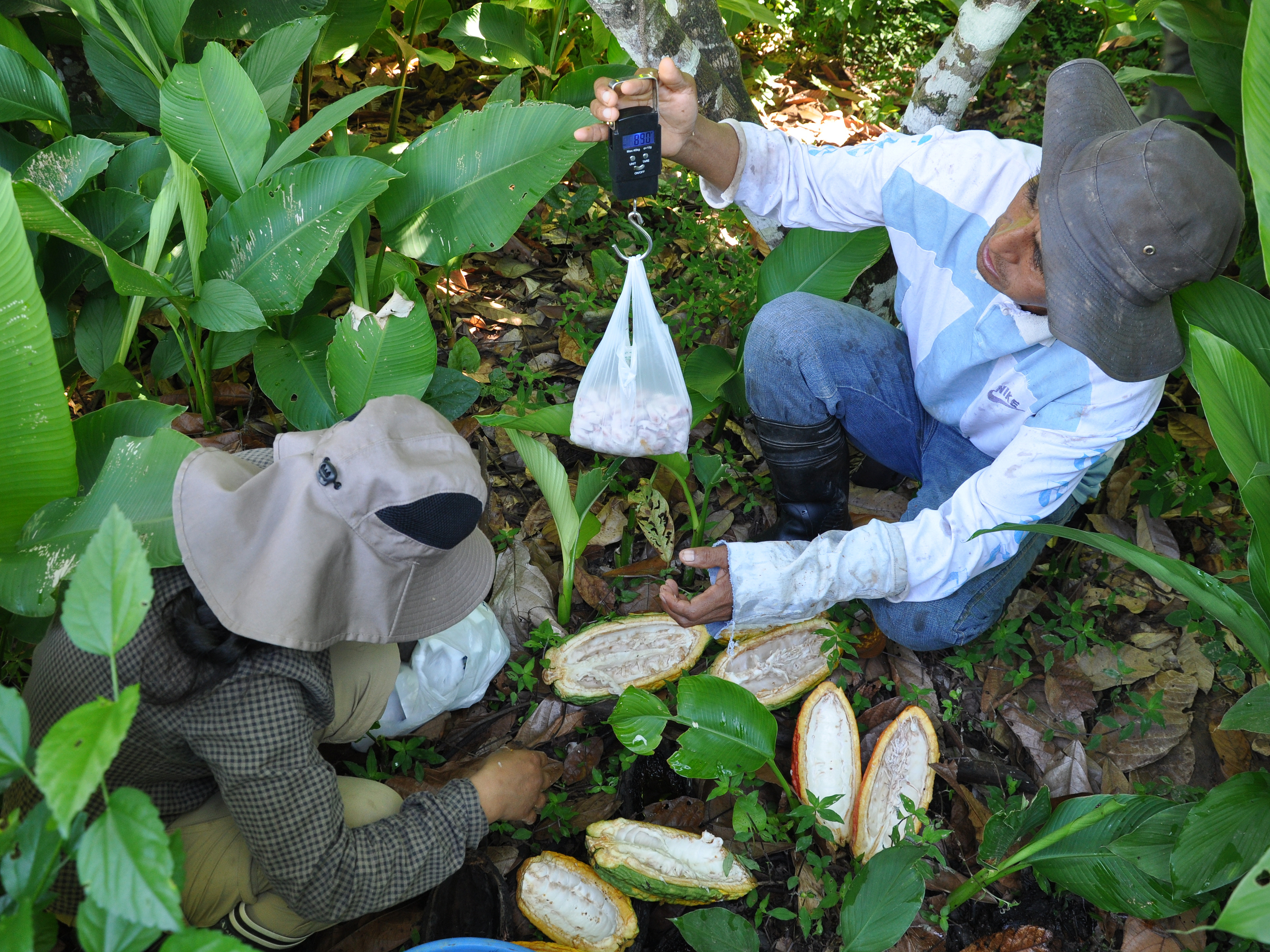

As part of the SysCom program, FiBL has been working with local partners for almost 20 years to compare organic and conventional farming systems in Bolivia, India and Kenya. In Bolivia, the trial focuses on cocoa farming systems.
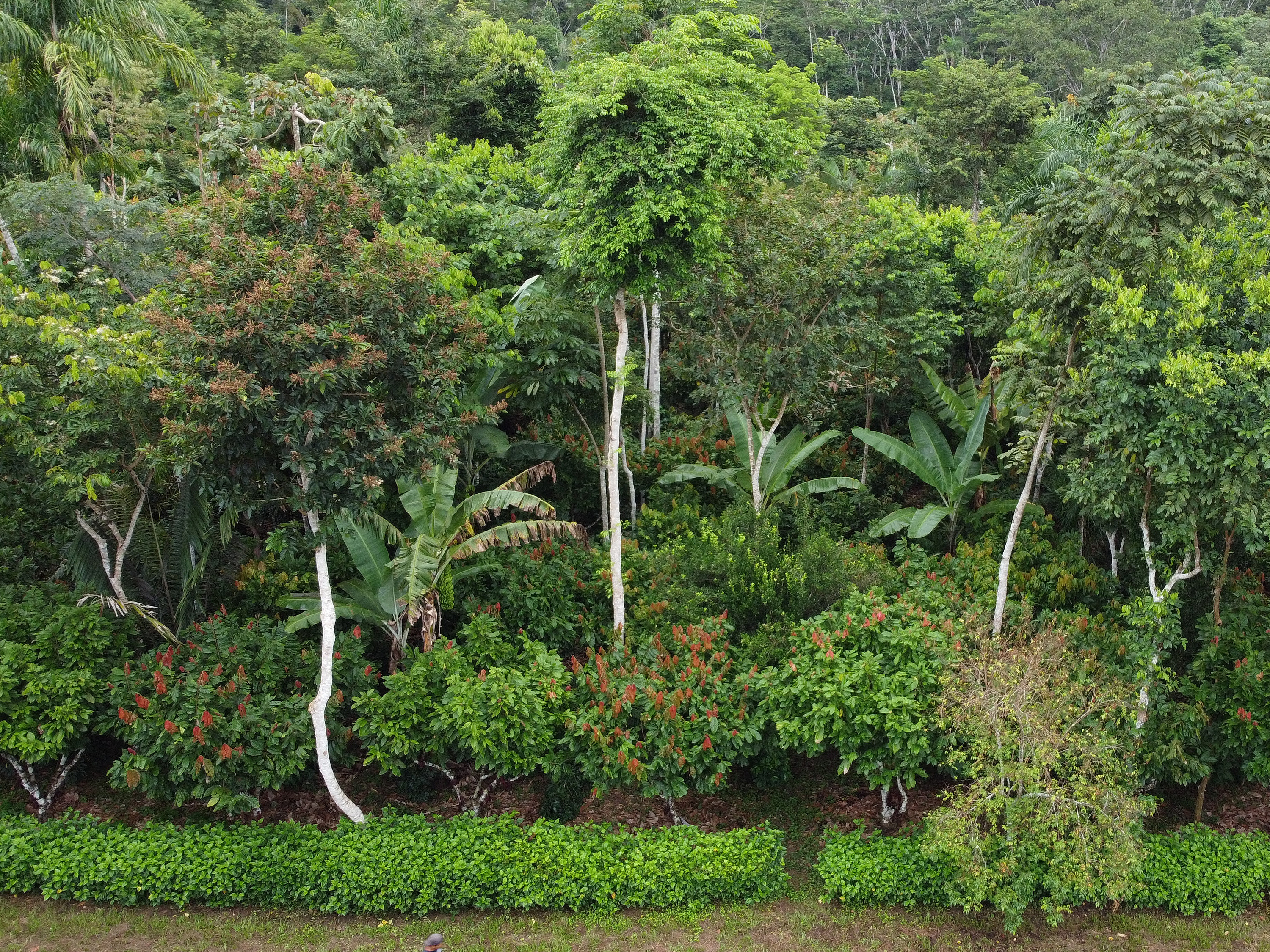
The results from Bolivia show that complex agroforestry systems successfully combine food production and ecology. Since 2008, the trial has been comparing five cocoa cropping systems in Alto Beni: complex, multistrata agroforestry systems are compared with cocoa monocultures, as well as organic with conventional farming.
The study published by FiBL, "Competitive yields in organic and agroforestry cacao cropping systems: results from 15 years of a long-term systems comparison trial in Bolivia" (see link below) shows the yields of cocoa and companion crops, and describes in detail how the systems have developed over 15 years and what conclusions can be drawn from the results for organic cocoa and agroforestry practices.
Yields well above the average yields of the largest producing countries
Average yields in conventional and organic cocoa monocultures reached 1,300 kilograms of dry cocoa beans per hectare during the mature production phase, whilst the three agroforestry systems averaged 736 kilograms per hectare. By way of comparison: according to FAOSTAT, yield data for the five largest cocoa-producing countries (Côte d'Ivoire, Ghana, Indonesia, Ecuador and Cameroon) stood at around 533 kilograms per hectare in 2022.
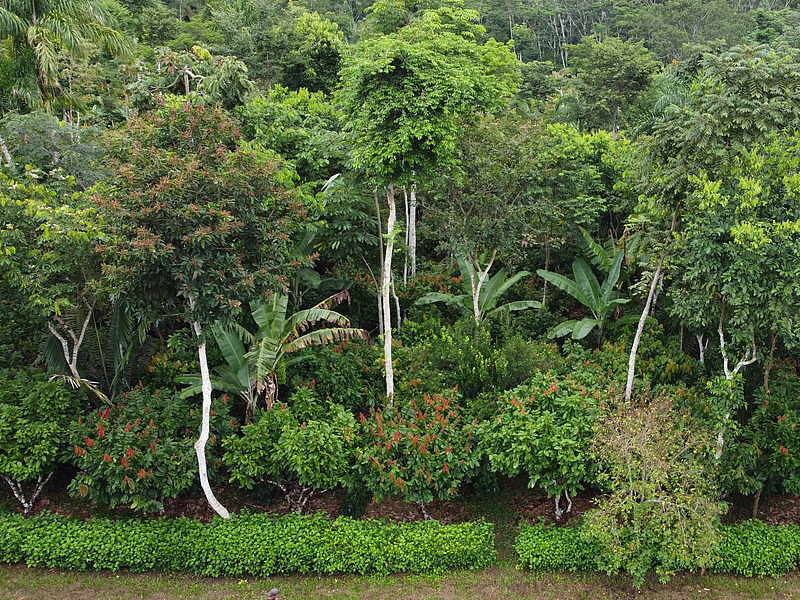
Even though the yields achieved in the agroforestry systems amount to only 56 per cent of those in the monoculture trial plots, they are still remarkable, particularly given that these are highly complex agroforestry systems, with 300 to 800 shade trees per hectare and over 50 companion species.
Previous and ongoing studies within the same trial show that, in addition to the cropping system, yields also depend heavily on the cocoa variety and the architecture of the cocoa trees. The trial involves a mixture of 12 cocoa varieties with varying production potential; potential yields could therefore be further increased depending on the choice of variety, but also through appropriate canopy management.
The study's findings also confirm that cocoa yields are limited by light availability. This is already established in the literature. The novel aspect of this trial is that the shade trees in all three of the studied agroforestry systems were regularly pruned to manage the trade-off between high tree density for ecological and timber production purposes and the need for light penetration for the crops. This regular pruning has a further effect: in agroforestry systems, it replaces the need for fertilisation by fuelling the carbon and nutrient cycles.
Production diversification and high system yields in agroforestry systems
The key advantage of agroforestry systems, however, lies in the diversity of products – up to 22 different crops grown over 15 years – resulting in an increase in overall crop and biomass production. In agroforestry systems, the marketable biomass produced was nearly 7 times higher than in monocultures.
The high diversity of products, which can include bananas, coffee, avocados, ginger or turmeric depending on the system, has the potential to lead to greater food security and greater autonomy for producers. Whilst cocoa is usually produced for export, the companion crops are often grown for the local market or subsistence.
Recommendations for the design and management of organic agroforestry systems
The study provides important insights for practical application:
- Combination of species: complex agroforestry systems allow combining different crops, which differ in terms of production cycle, growth habit and light requirements. All on the same plot!
- Organic farming without yield losses: the results show that organic cocoa production using compost can achieve yields similar to those of conventional production using synthetic fertiliser. In agroforestry systems, external fertilisers can be replaced (at least in part) by plants that produce a lot of biomass and are used as mulch. This principle from dynamic or syntropic agroforestry was successfully tested in the study.
- Importance of management: where there is a high density of companion trees, regular pruning is essential to ensure adequate light penetration and to achieve satisfactory cocoa yields.
A comprehensive economic analysis aims to identify barriers to organic and agroforestry systems
Together with a series of publications demonstrating the positive effects of agroforestry (for example, on biodiversity, the carbon and water cycle) the new results show that organic agroforestry systems can simultaneously deliver impressive productivity and thus make an important contribution to feeding the local population. However, the lower yields of the main crop, cocoa, compared with intensive monocultures, and the management of shade trees pose a challenge in practice.
In the long-term trial, data on the use of labour and materials were documented in detail from the outset. Based on this data, the research team is currently working on a comprehensive economic analysis of the farming systems. This will highlight where economic or political measures are needed to promote these productive and environmentally friendly farming systems. According to the researchers, improving the political and economic framework is crucial to making complex agroforestry systems viable and desirable for smallholder farmers. This also includes the provision of advice, training and services, such as the pruning of shade trees.
The study was carried out as part of the SysCom program (Farming System Comparison in the Tropics) and funded by the Swiss Agency for Development and Cooperation (SDC), the Liechtenstein Development Service (LED), the Biovision Foundation and the Coop Sustainability Fund.
Further information
Contacts
Study
Rüegg, J., Saj, S., Schneidewind, U., Milz, J., Schneider, M., & Armengot, L. (2025). Competitive yields in organic and agroforestry cacao cropping systems: results from 15 years of a long-term systems comparison trial in Bolivia. Agronomy for Sustainable Development, 45(6), 76. https://doi.org/10.1007/s13593-025-01073-8
Further Links
- fibl.org: Project entry in the FiBL project database
- systems-comparison.fibl.org: Project website SysCom
- youtube.com: Practical videos on organic cocoa cultivation and dynamic agroforestry systems