


"Farmers need information that is truly practical"
Voices on climate
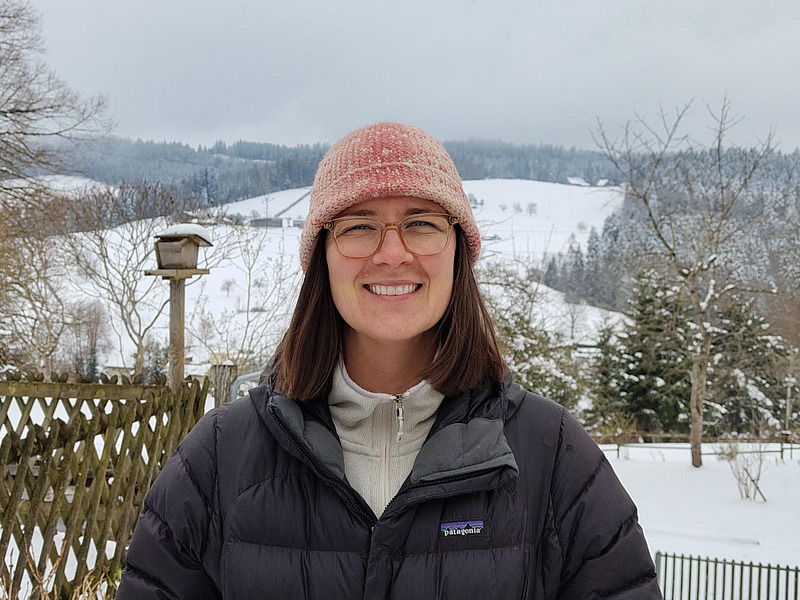
Lauren Dietemann has been a communication manager in the Department of Extension, Training & Communication at FiBL in Switzerland since 2020. (Photo: Nicolas Gahler)
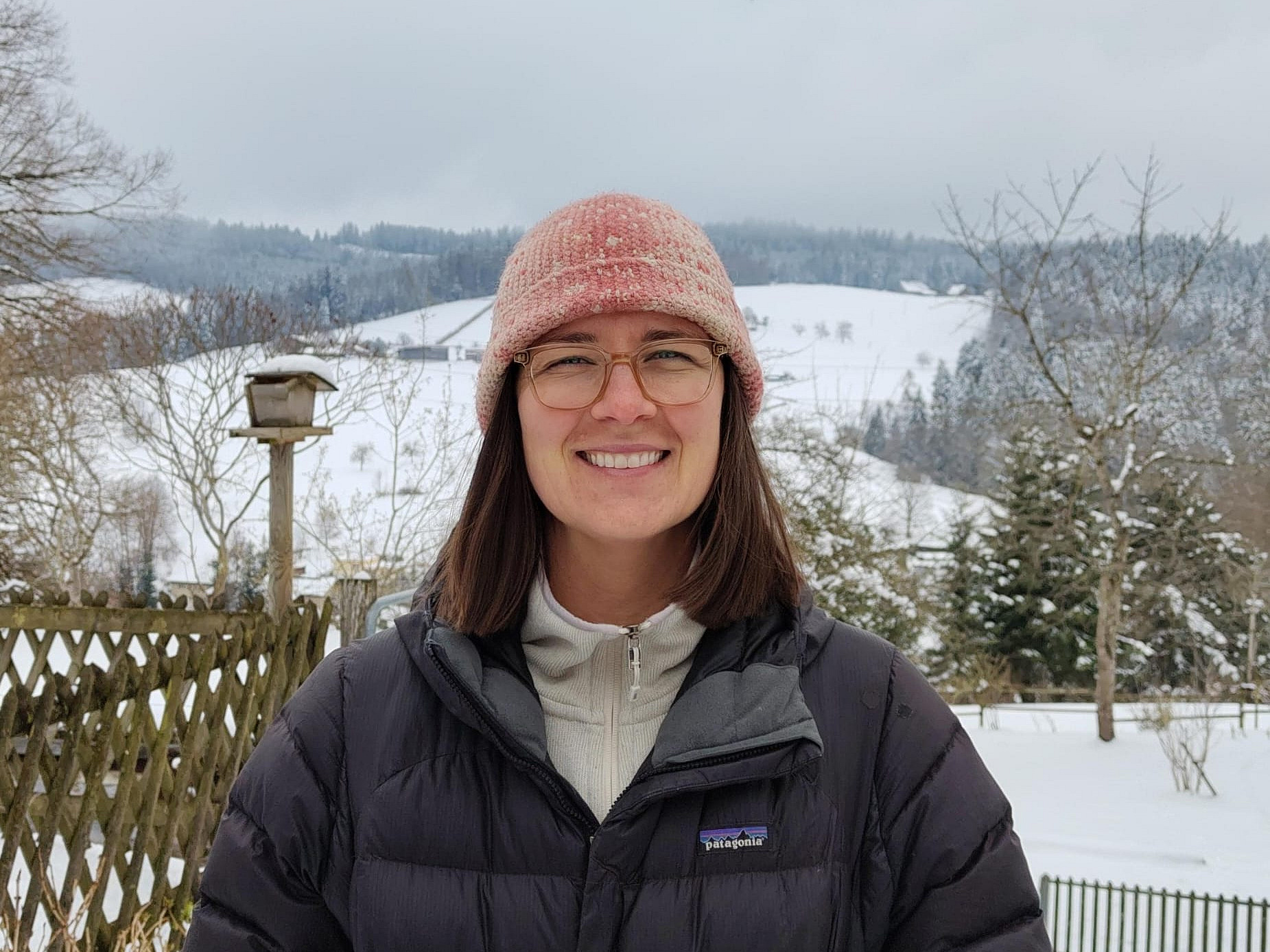
Lauren Dietemann has worked in knowledge exchange activities at FiBL for the past five years. She manages content for the Organic Farm Knowledge platform and coordinates knowledge transfer between research and practice across Europe. She previously studied "Organic agricultural food systems" at University of Hohenheim in Stuttgart, Germany and BOKU in Vienna, Austria. She also recently took over a dairy farm with her partner in Sankt Gallen, Switzerland. In the OrganicClimateNET project, she is responsible for developing the carbon farming knowledge base.
The OrganicClimateNET project brings together just under 20 European research institutes and organic farming associations. What are the aims?
We're establishing a network of 250 organic farms across 12 EU countries to advance climate and carbon farming in the organic sector. The main aim is to support farmers in calculating their carbon footprint and developing practical climate strategies that work for their specific farm and region. The project is evaluating how carbon farming can become a viable business model for organic farmers and generating policy recommendations to ensure climate policies support rather than burden the sector. I am responsible for building a comprehensive carbon farming knowledge base with over 120 knowledge materials like factsheets, videos or podcasts.
How exactly is this approached?
The 250 farms are organized into 24 regional hubs, each with a "lighthouse farm" and 10 to 12 additional farms. Hub coaches facilitate peer-to-peer learning and help farmers with carbon assessments and climate strategies. In the work on the knowledge base, we're assessing existing materials, adapting them for organic contexts, creating new resources where needed, and translating everything into multiple European languages. These materials will feed into a decision support toolbox on the Organic Farm Knowledge platform, an online platform for knowledge dissemination and exchange established in 2016.
And how do the organisations involved work together on this?
There are 18 partners from 14 countries involved in the project – research institutes, organic farming associations, like Bioland and Ecovalia, and policy organisations like IFOAM Organics Europe. We work through six complementary work packages covering farm networks, evaluation, knowledge development, policy, communications and coordination. Each country has a national coordinator overseeing their two hubs, which creates both horizontal knowledge exchange between farmers and vertical flow from farms to policy level and back.
What is FiBL's role?
FiBL coordinates the overall project, and we also contribute expertise in the knowledge base on organic climate practices, like I already mentioned, as well as our expertise in the policy topic. A key part of my work is ensuring that the materials we make available are truly farmer-facing and practical.
We're collecting materials from across Europe and tapping into practical expertise from organic research institutes and farming associations involved in the project. At the same time, we're also creating new knowledge to fill gaps that were identified. We are learning from the network's farms as they test strategies and share experiences, as well as from cross-national exchanges.
You mentioned knowledge gaps – can you elaborate?
We got feedback from Hub Coaches about where their farmers' interest lie, related to practices, and then mapped the readily available materials for that practice. The major knowledge gaps we found include topics like: planting and management of hedges, precision agriculture, use of resilient crop varieties, extensification of peatlands, to name a few.
You recently took over a dairy farm with your partner. How does this influence your work on knowledge exchange?
It's given me a deeper appreciation for the gap between knowledge coming out of research and farm reality. When you're reading about carbon farming practices from a desk, it all sounds quite straightforward. But when you're actually managing animals, dealing with weather variability, juggling labor constraints, economics – suddenly you understand why farmers need materials that are truly practical, not just technically correct. It also helps me understand the important role of the National Coordinators and Hub Coaches as advisors in the project – their role is essential.
What has been achieved in the project so far? And what are the challenges?
We're now in the second year. All 24 hubs are operational, lighthouse farms identified, and carbon assessments underway. We've collected nearly 80 existing materials from across Europe, made them publicly available, and are currently translating them into relevant languages.
The challenges are both practical and conceptual. Coordinating 250 farms across 12 countries requires navigating different languages and farming cultures. Carbon calculation tools and rewarding mechanisms are typically designed for conventional agriculture and don't account for organic farming's systemic approach. The last challenge I would highlight is avoiding "Carbon Tunnel Vision" – the project is climate-focused, but we must consider whole farming systems, not just carbon metrics.
But these challenges are exactly why the project is needed.
Further information
Contact
Links
- organicclimatenet.eu: Project website OrganicClimateNET
- organic-farmknowledge.org: Toolbox with materials from the OrganicClimateNET project