


"A hot summer costs several hundred million francs"
Voices on climate
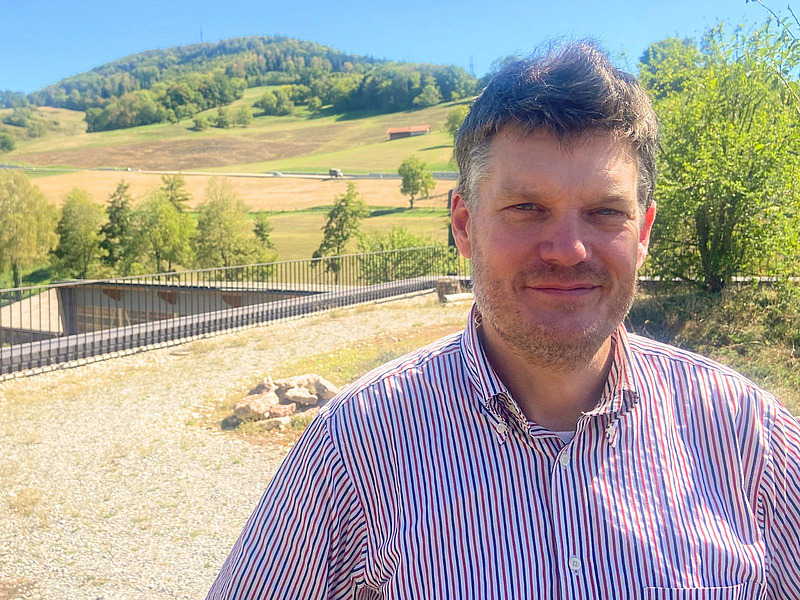
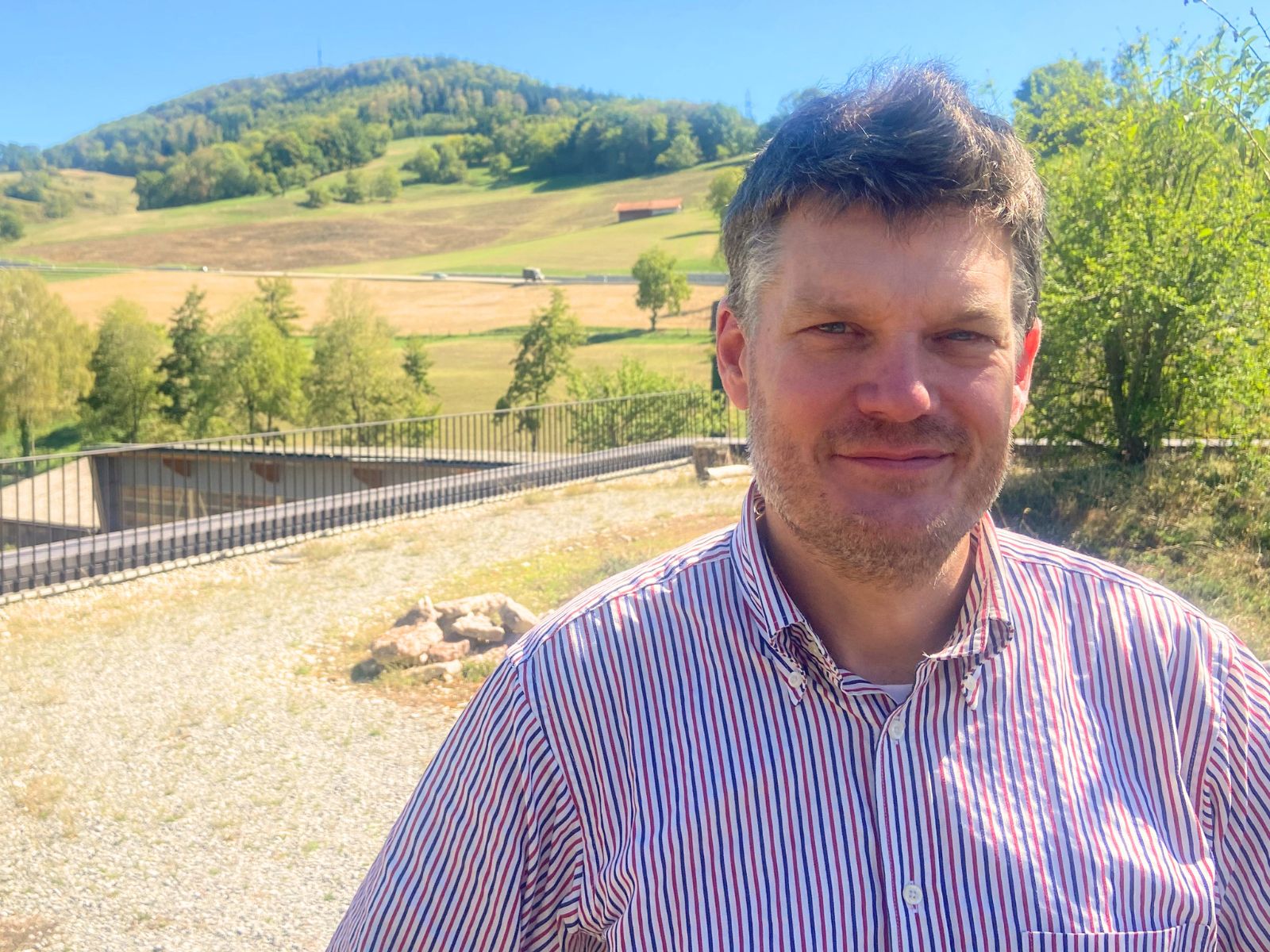
Jürn Sanders is Chairman of the FiBL Management Board. In this interview, he discusses the consequences of the hot summer for agriculture and organic farming. He calls for a systemic approach to better support producers in preparing for and coping with future droughts.
What lessons have you learnt from the summer of 2026?
Jürn Sanders: To be honest, the disheartening realisation that the scientific analyses we've been carrying out at FiBL for many years have been so thoroughly confirmed. We've been arguing for a long time that climate change is a major challenge and that we need a more resilient agricultural sector. What I also found striking was seeing just how much it costs. There are estimates that a hot summer in Switzerland costs several hundred million Swiss francs. It really, really costs a lot of money. And the political debate shows just how difficult it is for people to change their ways of thinking and arguing.
Where do you see potential for bringing about behavioural change?
The role of research is to contribute to a more fact-based approach and ultimately to make it clear: you cannot override nature, and it is more cost-effective to change course as early as possible. And that requires a societal dialogue. An immediate, radical change is not socially manageable. But we need honesty. If we carry on like this, it will become increasingly expensive, and our quality of life will decline. It saddens me to see how depressed the mood is in parts of the farming community, how crops have suffered and, for example, how the apples are falling too early.
Is there anything that has particularly struck you during this dry summer?
The hill opposite FiBL, which I look at every day, has become increasingly yellow-brown. I've never seen it like that before. It really was a frustrating sight to behold day in, day out. It's also worth noting, however, that when it started raining again, the slope quickly turned green once more. You could almost see it as symbolic: we have a major problem, but we can still make a difference.
Is there something comforting about that?
Yes, absolutely. But we mustn't forget that we have a serious problem; the science wasn't wrong in its predictions. Yet – as the science also tells us – change is still possible; we can slow down global warming; we can even stop it. We just have to do it.
So you still believe in climate protection?
Climate protection remains important. We must find a way to reduce the CO₂ content in the atmosphere, and we can do so – after all, we have effective tools at our disposal. At the same time, however, there is also a need to address the issues of climate resilience and adaptation. This is becoming more urgent every year, which is why we have set out in the FiBL strategy that, in the future, we intend to tackle climate protection and climate resilience in a targeted and combined manner.
Where do you see the biggest shortcomings in terms of climate resilience within the Swiss agricultural and food sector?
When we talk about the biggest shortcomings, it suggests a little that there are two or three levers we can pull to make things better. But it's important to strengthen the whole system. For example: building soil organic matter, growing cover crops, expanding crop rotations, using water efficiently or promoting biodiversity. For me, however, strengthening the system also means strengthening farms and their economic resilience. We want to empower them to cope with this additional uncertainty. Climate resilience has a lot to do with diversity. In Switzerland, we see very good examples of this in agroforestry in particular, which confirm this. In doing so, we must also look at supply chains, in which regionality must play a more important role. So, once again, to increase climate resilience, we must take a systemic approach.
So what are the key areas of focus for FiBL's research and advisory work?
We talk a lot about breeding and variety selection; this will certainly remain central. But the question is also: what do we do about plant protection and fertiliser management? How do we protect crops and animals from the heat? How can we breed plants and animals that can cope better with higher temperatures? At FiBL, we have resolved to treat climate resilience as a cross-cutting issue. In other words, wherever appropriate, we will always ask what impact different climatic conditions might have. The second thing that will certainly be very important for us is this: our colleagues at FiBL in France are already working in Eurre, in the south of France, under climatic conditions similar to those expected in Switzerland in the future. We want to make even greater use of the experiences of researchers, as well as farmers, in this region in our work.
This summer, for example, we're also seeing the limitations of self-sufficient organic farming when it comes to feeding livestock. Under these increasingly challenging conditions, is there a need to open up to the rest of the agricultural sector, or do you see other consequences arising from the events of the last few months?
For Bio Suisse (the umbrella organisation for Swiss organic farmers, editor's note), the aim is to emphasise the high credibility of the "Bud" label and its standards. I find it understandable and appropriate that the organisation is responding to the current situation by temporarily permitting the purchase of imported and conventional forage from grassland. At the same time, however, the standard remains that where it says 'organic' on the label, the product must be organic and the animals must be fed accordingly. It is certainly possible, but these production systems need to be developed further accordingly. What this summer also shows is that cooperation between farms is becoming increasingly important, not least because the extent to which farms are affected varies greatly from region to region.
Doesn't it undermine the credibility of organic farming if organic milk is suddenly produced from conventional fodder, simply because it was hot?
We have principles and guidelines that we need to put into practice and interpret. I believe it is necessary to allow for flexibility in exceptional circumstances. What we must also take into account, however, is the knock-on effect: organic farmers buy conventional feed, whilst both conventional and organic farmers in Switzerland buy feed from neighbouring countries. At the end of the chain, there will be farms that cannot afford this and will have to close their gates. But back to organic farming: the sector in Switzerland has discussed feeding practices very intensively, and the guidelines, which have been tightened in recent years, should not be fundamentally called into question.
But what if we have another summer like that? Will there be special exemptions again?
Yes, or we could now engage in dialogue with the farming sector and ask: how is it possible to achieve sufficient grassland yields under new climatic conditions?
What does this mean for FiBL's work?
Crop rotations and drought tolerance will change; different varieties will become more economically viable than is the case today. We must continue to develop production systems now. And it is essential to disseminate existing information – this is particularly important here, and the experts at FiBL are already doing so.
Will organic farming emerge stronger from the crisis, or will it be under constant pressure to justify itself in the coming years?
The fundamental principle of organic farming is, after all, to achieve the highest possible level of systemic stability, and that is precisely what is needed today. When we look at livestock, it is not just a question of farms having animals that are characterised by particularly high productivity, but also that they are robust. And the same applies to crop production. These are the fundamental elements of organic farming. And that is precisely why we are seeing many conventional farmers taking an interest in organic practices. In that respect, I believe the appeal of organic farming has been strengthened.
Interview: Adrian Krebs