




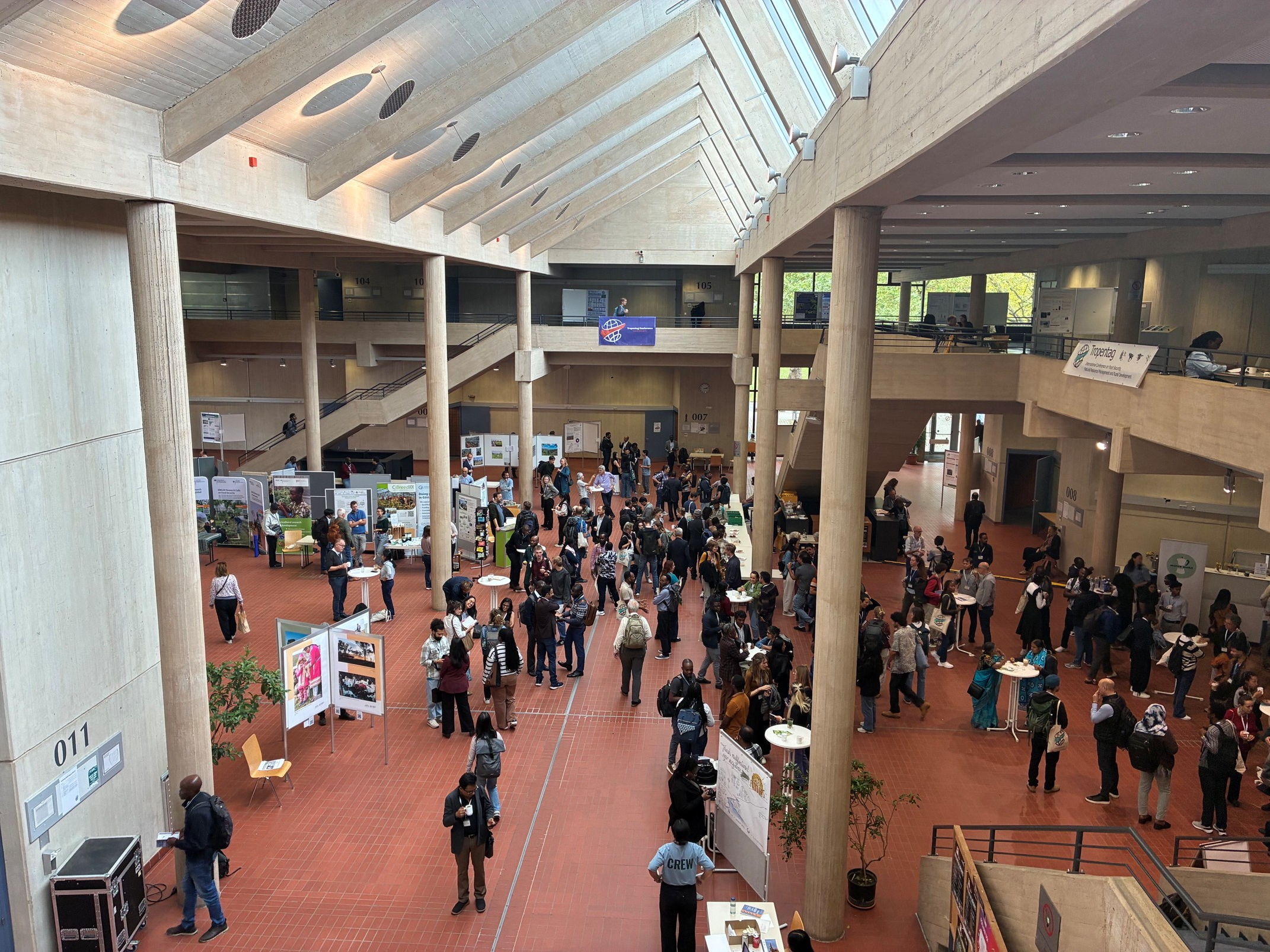
FiBL was strongly represented at Tropentag* 2026 in Göttingen, contributing to workshops, scientific sessions and networking activities on international organic trade, agroecology, agrobiodiversity, climate resilience and sustainable food systems. FiBL experts brought perspectives ranging from global market data and smallholder value chains to agroforestry, soil fertility and policy support for resilient farming systems.
International organic trade under scrutiny
How can international trade in organic products be made reliable, sustainable and accessible to producers in the Global South? This question was at the heart of the workshop "International Trade with Organic Products", held on 16 September 2026. The workshop was part of the new "International Network for Organic Trade" (INOT), an initiative of the German Federal Ministry of Agriculture, Food and Regional Identity (BMLEH). INOT aims to strengthen international dialogue on organic trade and foster closer links between policy, research and practice.
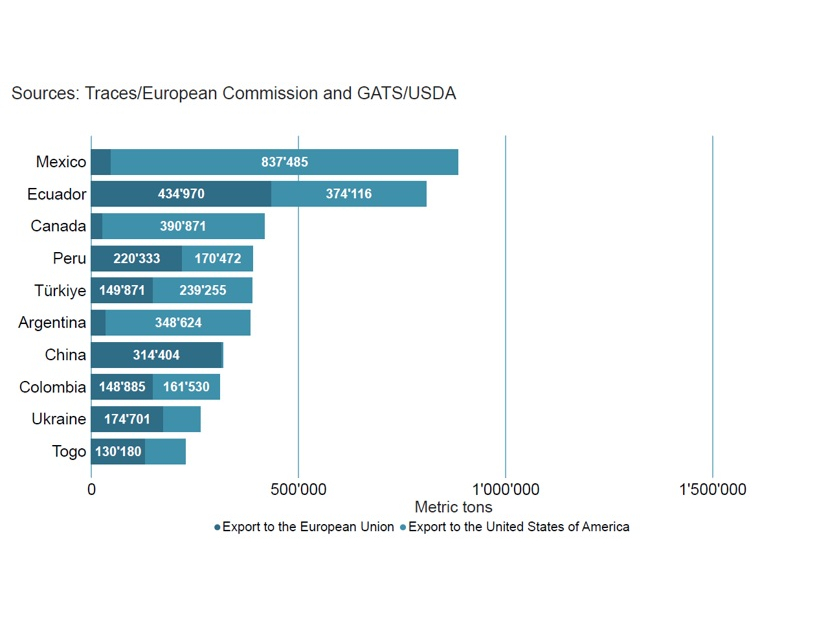
FiBL contributed two complementary perspectives. Helga Willer, FiBL researcher on global organic agriculture statistics and markets, opened the workshop with the latest data and trends in global organic agriculture, organic markets and, in particular, international trade – the latter being based on data published by the European Union and the USA. The data showed both the growth of international organic trade and its concentration in a relatively small number of countries, especially in Latin America, and in product groups such as tropical fruit and animal feed.
The discussion also underlined how challenging international comparisons remain. Data collection methods differ considerably between the EU and the United States. Together, these two markets are estimated to account for around three quarters of global organic trade volume.
Toralf Richter, FiBL expert on value chains and markets, placed these figures in the context of international supply chains. Particular attention was given to the impact of rising certification costs on smallholder organisations. New EU requirements for group certification can substantially increase costs for large producer groups. At the same time, high prices on conventional markets may reduce the attractiveness of organic certification.
The workshop also addressed trade integrity and the growing complexity of organic requirements across markets. One possible way forward is stronger mutual recognition, or equivalence, between standards, reducing the need for producers to undergo separate certification for each export market.
This points to a potential role for INOT: rather than creating new structures, the network could serve as a platform for learning and dialogue by identifying trade barriers, connecting experiences from different countries and developing practical approaches to more credible and fair international organic trade.
Mediterranean resilience: bringing projects and perspectives together
Harun Cicek, FiBL expert specialising in dryland agriculture and Deputy Head of the Agroecosystem Innovation & Adoption group, organised a joint session on 16 October, bringing together ten projects funded under PRIMA – the Partnership for Research and Innovation in the Mediterranean Area, an EU-supported research and innovation programme – and two Horizon Europe projects working across the Mediterranean region.
The session brought together evidence and perspectives from a wide range of stakeholders and synthesised emerging lessons on water harvesting, agroforestry, neglected and underutilised species, circular economy and the Water-Energy-Food-Ecosystems (WEFE) nexus, an integrated approach that considers the interconnections between water, energy, food production and ecosystems.
Cross-cutting issues included upscaling, socio-economic inclusion, gender, market integration and policy coherence. The workshop also provided an opportunity for networking between researchers, practitioners and policymakers. More information is available from the TRANSFORMED project website.
Agrobiodiversity, living landscapes and policy
Amritbir Riar, head of FiBL's Resilient Cropping Systems group, and Marc Cotter, FiBL senior scientist specialising in tropical production systems, agroecology and sustainable land-use systems, contributed to a pre-conference workshop held with the Government of the Indian state of Karnataka and GIZ, the German Agency for International Cooperation, on 15 September.
Entitled "From Living Landscapes to Living Policy: Institutionalizing Agrobiodiversity Conservation for Climate-Resilient Agroecological Transformation", the workshop brought together farmers, seed custodians, researchers, policymakers and development practitioners.
How can landrace conservation and farmer-led agrobiodiversity initiatives be strengthened through farmer participation, appropriate incentives and lasting institutional and policy support? Drawing on Joida Organic Block, a regional initiative in the state Karnataka aiming to transition an entire farming area towards organic and agroecological production, and European biodistricts, this question was explored in presentations, panel discussions and participatory sessions.
Both also attended the 37th members' meeting of ATSAF, the Council for Tropical and Subtropical Agricultural Research, held alongside Tropentag on 16 September. Marc Cotter serves as an associate board member of ATSAF.
Further FiBL contributions
FiBL researchers also contributed to scientific work on organic production strategies and soil fertility in Kenya, reducing greenhouse gas intensity, climate-resilient cocoa production and long-term agroforestry research in Bolivia.
Taken together, FiBL's contributions reflected several of Tropentag 2026's central themes: agroecology, resilient production systems, smallholder farming, agrobiodiversity, sustainable value chains and the development of food systems able to respond to climate and market pressures.
*Tropentag is an annual international conference on research and development in tropical and subtropical agriculture and food systems, bringing together scientists, practitioners and policymakers from around the world.
Authors: Helga Willer, Toralf Richter, Harun Cicek, Amritbir Riar, Marc Cotter
Further information
Contacts
Links
- tropentag.de: Website Tropentag
- troptentag.de: Workshops
- organic-world.net: Organic Farming Statistics
- prima-med.org: Website of PRIMA, the Partnership for Research & Innovation in the Mediterranean area
- transformed-prima.eu: Website of TransforMed
- transformed-prima.eu: From Demonstration to Transformation: Integrated Solutions for Water, Food, Agroforestry & Ecosystems in the Mediterranean