


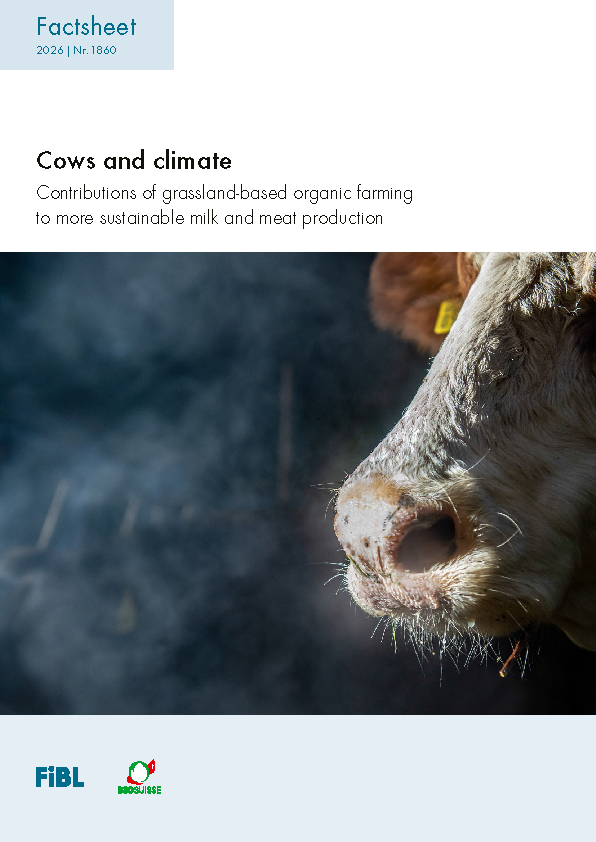
Ruminants convert grass and other plant material that humans cannot digest into high-quality protein, making an important contribution to food production. They also help maintain cultural landscapes, promote biodiversity and support nutrient cycles. In Switzerland, where around 70% of agricultural land is permanent grassland, grazing livestock enables the sustainable use of land that is unsuitable for crop production.
Methane remains a challenge, but according to FiBL, the solution is not to abandon cattle farming but to improve how it is managed. Site-adapted feeding, longer productive lifespans for cows and the use of local resources can improve the climate balance and reduce greenhouse gas emissions. Tahe factsheet concludes that organic, grassland-based cattle farming can make an important contribution to climate protection, resource efficiency and a more sustainable agricultural system.
The publication is available for free download in the FiBL shop.
FiBL Contact
Bio Suisse Contact
Tonia Willi, Bio Suisse
tonia.willi(at)bio-suisse.ch
Link
- fibl.org: Fakt sheet "Cows and climate"