


"Modelling can be used to derive concrete recommendations"
Voices on climate
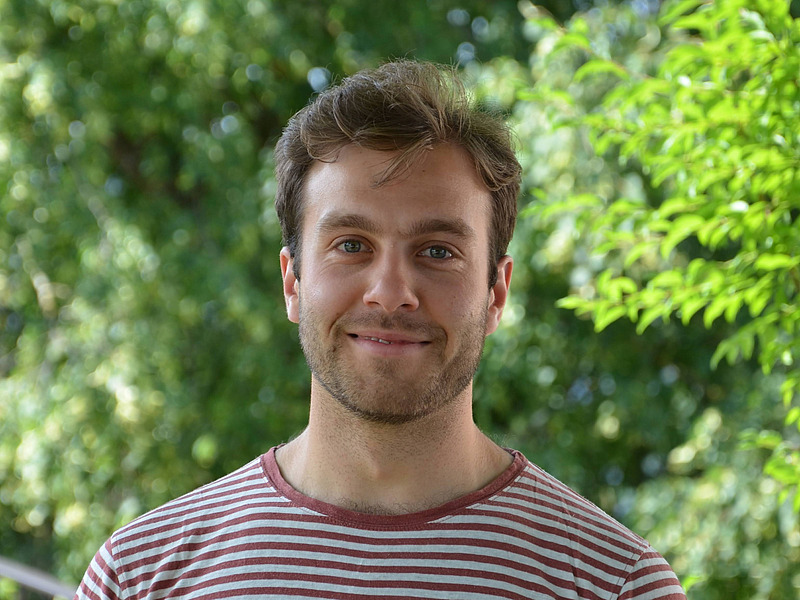
Philipp Oggiano is an agricultural scientist and has been a research associate in the Department of Food System Sciences at FiBL in Switzerland since 2023. (Photo: FiBL, Andreas Basler)
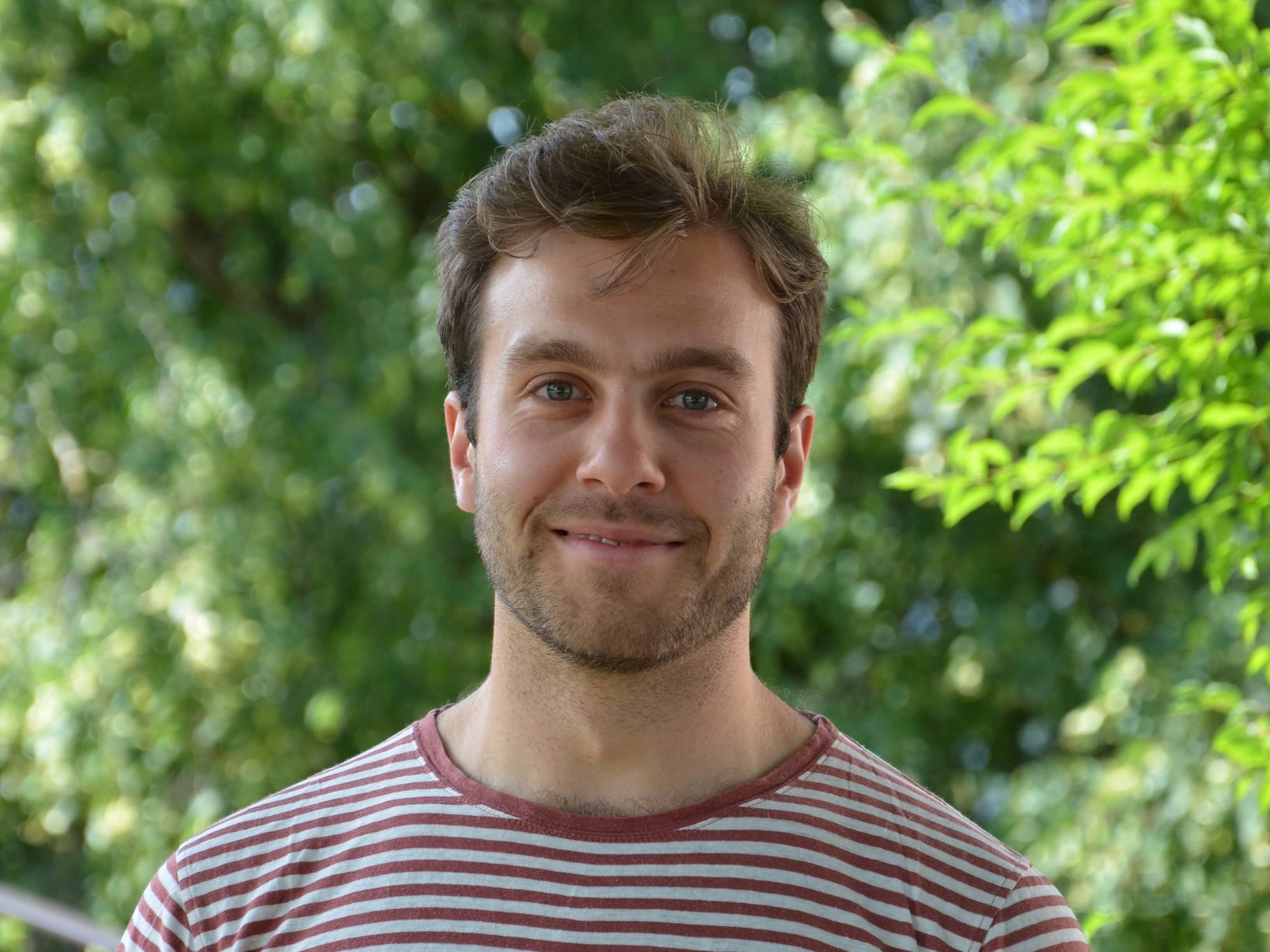
Philipp Oggiano is an agricultural scientist and has been a research associate in the Department of Food System Sciences at FiBL in Switzerland since 2023. His research focuses on life cycle assessment and modelling of sustainable agricultural and food systems. Among other things, he was involved in a study that investigated how agriculture in Zurich can be aligned with the city's net-zero climate target.
Many regions, companies and cities are setting targets to reduce their own climate emissions. The city of Zurich has also set itself such a target and aims to reduce direct greenhouse gas emissions to "net zero" by 2040. Most people's first thoughts turn to transport, industry and households. However, with 24 farms and 810 hectares, the city of Zurich is also the municipality with the largest agricultural area in the canton of Zurich.
How can these farms contribute to achieving the climate target? FiBL investigated this in a model study commissioned by the city. Together with the responsible city administration and farmers from the urban area, various scenarios – from moderate optimisations to major changes – were developed in three workshops, and the corresponding emissions were calculated.
The net-zero target leads to conflicting goals
The calculations lead to a sobering conclusion: under current operating structures, the net-zero target is virtually unachievable. The only scenario that comes close to meeting the target in mathematical terms is the widespread abandonment of livestock farming in urban areas. Land currently used for feed production would provide biomass for energy generation, and in this scenario, biochar would be added to the soil on a large scale for carbon storage. Technically, these measures would reduce emissions almost completely. However, this scenario reveals clear conflicts of interest.
If we look at agricultural emissions in isolation from other urban emission sources, ruminants account for the majority of greenhouse gas emissions due to their methane emissions and manure management. Every animal less, therefore, means fewer emissions. However, it should be noted that agricultural emissions account for only 0.2 per cent of total urban emissions. Agriculture without animals would also mean a sharp decline in local food production. Farm animals also provide farmyard manure, which cannot be completely replaced by biogas fermentation residues. And urban agriculture would lose a social function: grazing animals shape the landscape and the recreational value of urban green spaces. This is where issues of climate protection, local food security, economic efficiency and social expectations come together.
A middle ground may be the solution
The results of the study also suggest that the solutions lie beyond "all or nothing". The "Feed no Food" scenario presents an interesting middle ground. In this scenario, the animals are fed exclusively on grass and on by-products unsuitable for human consumption. Feed and fertiliser imports are completely eliminated, as are a large proportion of the fossil fuels consumed. To further reduce emissions, the existing fossil fuel-powered machinery would be converted to alternative power sources.
Although absolute emissions in the city would rise slightly in this model, as more ruminants would be needed to utilise the pasture land, resource efficiency would increase, and the system would become more coherent, even if this would have a negative impact on the absolute local carbon footprint.
Modelling helps to develop concrete recommendations
The study emphasises that there are no easy solutions for climate protection in agriculture. Every measure taken to protect the climate has an impact on production or the economic viability of farms, for example. Scientific modelling was used to highlight these conflicting goals, enabling concrete recommendations to be derived. The study provides the factual basis on which politicians and society must now decide what kind of agriculture they want for the city of Zurich in the future.
Further information
Contact
Links
- agrarforschungschweiz.ch: Original article of the study "Net zero for agriculture within the vity of Zurich: an achievable goal?"
- landwirtschaft-klima-wandel.podigee.io: Podcast "Net zero in urban agriculture – utopia or feasible?" (in German)