


"We need to move away from the victim-perpetrator debate"
Voices on climate
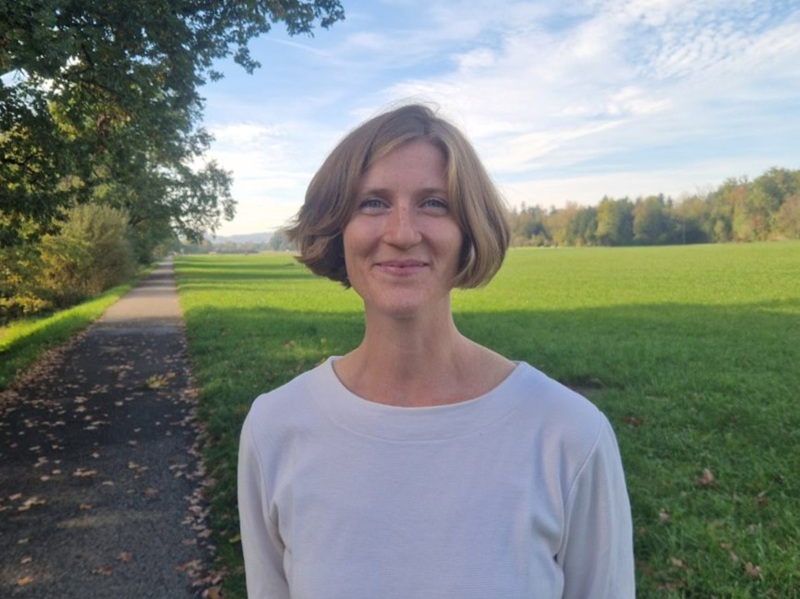
Eva Goldmann is an agricultural expert and project leader at WWF Switzerland. Previously, the agronomist, who specialises in agroecology, worked as a research associate at FiBL. Her work focused, among other things, on the impacts of climate change on farmers in Europe and the Global South.
How did the summer of 2026 affect you?
Eva Goldmann: Personally, it was the heat that really got to me. Especially during the first heatwave in May. I made a special trip to the mountains back then, but even at an altitude of over 2,000 metres it was still far too hot. At the same time, I wonder whether this summer also has its positive sides, because it's a wake-up call – climate change, which is often an abstract concept, has become very clearly noticeable here in Switzerland too.
So is climate protection still a major focus for you at the WWF?
Yes, absolutely: climate protection has been a cornerstone of the WWF's work for decades and isn't something we work on one day and ignore the next. And to achieve this, we need to reduce emissions as quickly as possible. Last summer showed just how vital healthy soils, sufficient water in the countryside and resilient ecosystems are. They are essential for ensuring that agriculture can continue to function in the future.
What do you see as the most important areas for action?
Agriculture plays a vital role in climate protection. At the same time, it is one of the sectors that feels the effects of climate change particularly early and directly. At WWF, we are committed to finding solutions together. For example, we are involved in the Swiss Climate Alliance, which creates incentives for climate protection measures in agriculture. At the same time, we are working to ensure that consumption and diet also become more sustainable.
What does it mean to make consumption sustainable?
Agriculture and consumption go hand in hand. If we want farms to operate in a way that is more climate- and nature-friendly, we must also discuss what foods we demand and what incentives we put in place within the food system. If meat sometimes costs less in shops than a plant-based alternative, something is going wrong. Such price ratios create the wrong incentives – for consumers as well as for the agricultural sector.
In which areas of climate adaptation do you see a pressing need for action?
Soil health and soil cover are major factors and a good example of where climate protection and climate adaptation can go hand in hand. Uncovered soil can become hotter than tarmac in summer. Healthy soils, on the other hand, help to store water, can contribute to climate protection and make farms more resilient to extreme weather. That is where our WWF projects come in.
Livestock farming is, of course, a highly controversial issue in the context of climate change – what is the WWF's stance on this?
Fundamentally, our aim must be to practise agriculture that is adapted to the local environment. In our view, the crucial question is not "animals, yes or no?", but how many animals we keep and how we feed them. However, this summer, even farms practising location-adapted farming with land-based livestock rearing struggled to provide enough feed for their animals. This raises an important question: what will location-adapted livestock farming look like in the future in a changing climate?
Agriculture is severely affected by climate change and, at the same time, is seen by environmental organisations as one of the contributing factors. What is the WWF's current stance on this?
In a summer like this one, the farming sector is suffering significantly. We can see that there are many farmers in Switzerland who are committed to climate protection or who want to adapt their farms to the climate of the future. We need to move away from this "victim-perpetrator" debate and create framework conditions that strengthen agriculture, the climate and nature together.
How are you going about finding these solutions?
At the WWF, we work on various levels. We advocate for appropriate policy frameworks, collaborate with stakeholders across the value chain and support projects on the ground. We are part of the large-scale AgroImpact project, which aims to reward measures taken on farms and, by measuring changes in soil carbon, demonstrate that these measures can bring about real change.
Speaking of agricultural policy conditions: how satisfied are you with the draft AP30+ – the Swiss agricultural policy after 2030 – in terms of its climate-related elements?
One important step is certainly that the climate targets – which have been set out for years in the Climate Strategy for Agriculture and Food – are now finally being enshrined in law. However, the Federal Office for Agriculture has yet to provide an answer to the question: how do we achieve an effective reduction in greenhouse gas emissions in agriculture? There is an urgent need to catch up in this regard. The same applies to the design of support for adaptation measures. This must not remain a collection of emergency measures such as hay imports from Canada.
Interview: Adrian Krebs, FiBL
Further information
Links
- wwf.ch: Topic of agriculture (in German, French and Italian)
- klimabuendnis.ch: Klima-Bündnis Schweiz (in German and French)
- agroimpact.ch: AgroImpact (in German and French)