


As climate change intensifies droughts and heat stress across West Africa, the question facing smallholder farmers is urgent: how can we feed growing populations on degraded land with increasingly erratic rainfall? A new two-part podcast series explores what five years of rigorous research on agroforestry integration in the Sahel reveals about building resilience, improving livelihoods, and scaling sustainable farming practices.
Transforming agricultural systems with shrubs and trees
The SustainSahel project, funded by the European Union's HORIZON 2020 research and innovation programme, investigated whether deliberately integrating shrubs and trees into crop and livestock systems could transform farming across Senegal, Mali, and Burkina Faso. Moving beyond promising pilot projects, the research combined farmer knowledge with randomised controlled trials to generate evidence on what actually works — and for whom.
Two episodes on the project and beyond
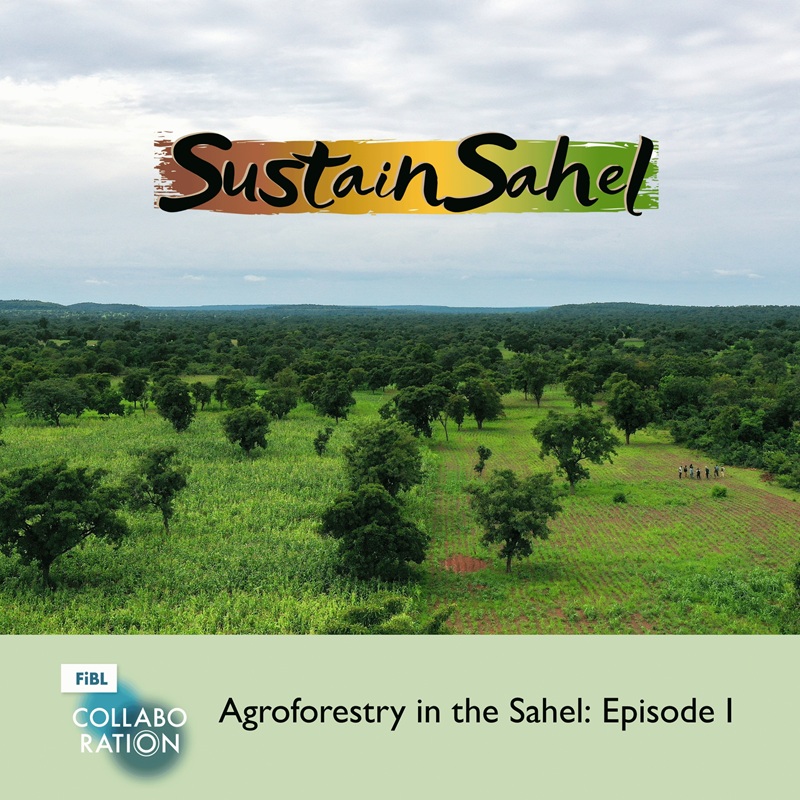
In "Episode 1: Re-greening the Sahel", we travel to three West African countries to understand the farming realities smallholders face, explore how agroforestry functions in one of the world's most challenging climates, and meet the researchers and communities who shaped this transdisciplinary project through COVID-19 and regional instability.
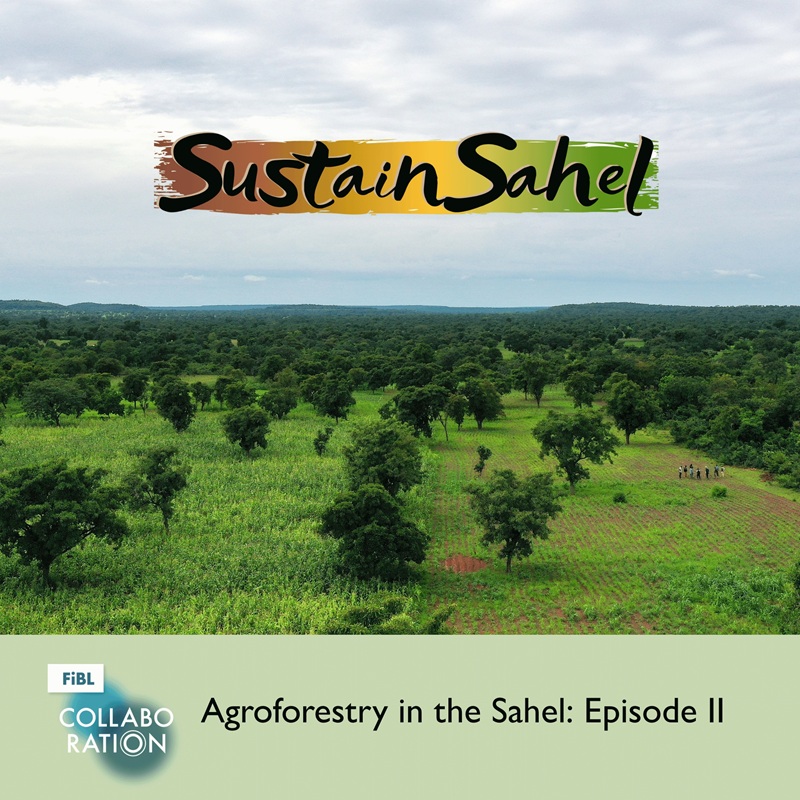
"Episode 2: From Pilot to Practice" shifts focus to the hard evidence. What do five years of impact data tell us about adoption, economics, and gender? Which policy levers and scaling pathways could extend these benefits beyond research sites? Through candid reflections and surprising findings, the episode examines what it genuinely takes to transform agricultural practice at scale.
Both episodes are written and narrated by Lauren Dietemann, with Harun Cicek and Christian Grovermann as experts from the project (all FiBL).
Further information
Contacts
Links
- fibl.org: FiBL Collaboration "Agroforestry in the Sahel" podcast
- sustainsahel.net: Project website
- sustainsahel.net: Project results and learning materials
- organic-africa.net: Organic Africa Training Manual Agroforestry in the Sahel Chapter