


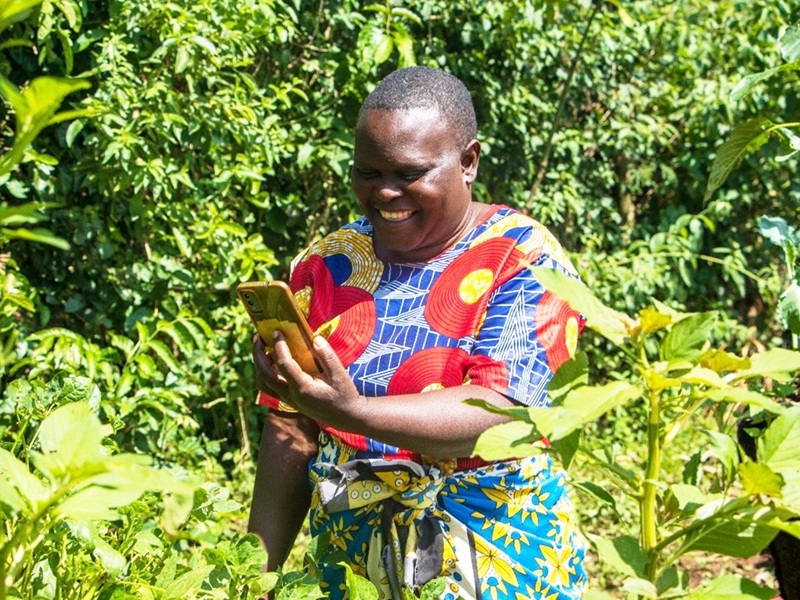
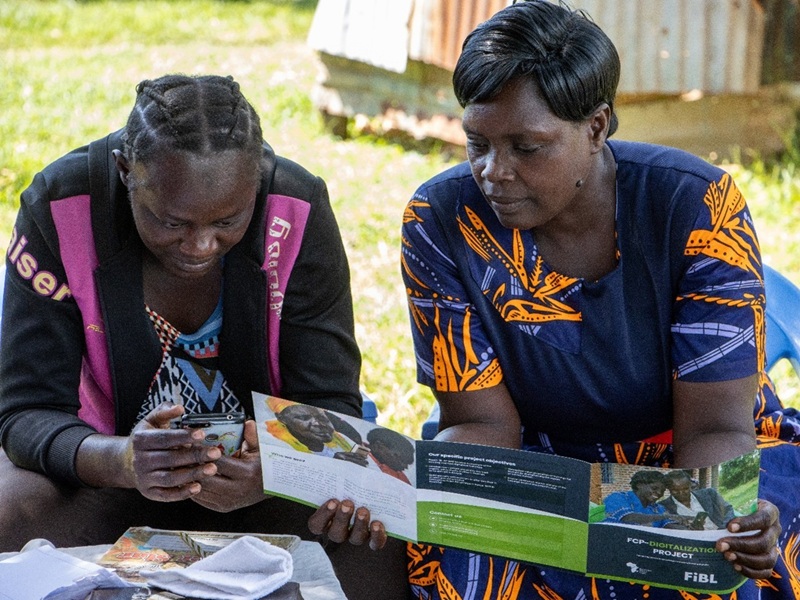
Building on lessons from a pilot testing SMS, IVR (interactive voice response, a system that delivers audio messages over the phone), and app-based technologies for farmers training, the Digital Training Materials project scaled up digital learning on organic agriculture and value chains, reaching up to 50,000 smallholder farmers in Kenya, Rwanda, and Mali. Several additional technologies were used, from WhatsApp and social media to videos, comic books, chatbots, tablets, and Raspberry Pi computers.
Tailored content and delivery for diverse needs
One key learning is that content should not only align with the audience's interests and learning levels—making it essential to assess farmers' interests and existing knowledge—but also be delivered in formats that reflect their preferences and realities. This includes addressing barriers such as low literacy, limited smartphone access, poor connectivity, and mistrust of calls and SMS messages, which are sometimes perceived as spam. Promoting training through trusted organisations can also help overcome such challenges.
Voice-based tools proved particularly effective for farmers with limited literacy or poor eyesight, while app-based and visual formats, including chatbots, appealed to farmers with higher digital literacy. In Rwanda, engagement was much higher in IVR than in SMS training, as farmers preferred listening rather than reading. Storytelling or visualisations that resonated with learners' realities were also key to conveying information that farmers can relate to.
Linking participation to tangible economic opportunities—such as access to buyers, certification systems, or post-harvest value addition—was another factor that increased participation. When farmers see clear benefits to their livelihoods, they are more motivated to adopt new practices.
However, motivation alone is not enough. For example, when training is accessed on a private device, such as a smartphone or a simple phone, social dynamics also play an important role. Who controls or has access to the phone strongly influences inclusivity, meaning that even technically accessible tools may exclude certain groups if these dynamics are not considered.
Building blended learning pathways
While digital tools offer several advantages, the projects found that they are most effective when combined with traditional advisory and information formats. For example, SMS or IVR training linked farmers to further support by phone or additional training. Information delivered in digital formats was further discussed in peer groups, highlighting that learning is a continuous and nonlinear process, in which every action—whether a training session, coaching, peer exchange, campaign, or written informational material—contributes to the learner's journey. For this reason, when designing learning activities, it is useful to consider what learners experienced before being exposed to the information and reflect on the next step they should be guided towards.
Iterative development and continuous learning
The project also highlighted the importance of continuous refinement of both content and technologies used. An agile approach that incorporates regular user feedback allows digital tools and training methods to adapt to farmers' evolving needs and technology developments. Robust monitoring systems further enable real-time tracking of engagement and learning outcomes, allowing content and delivery methods to be adjusted to remain relevant and effective.
Looking ahead
These projects demonstrate that many smallholder farmers value innovative knowledge exchange formats that include digital training tools and are interested in further opportunities to engage with them. As smartphone ownership, internet coverage, and digital literacy continue to expand in rural areas, the focus is steadily shifting towards digital technologies. As a result, digital tools should receive stronger consideration at the policy level and be recognised as a powerful means of supporting smallholder farmers and advancing agricultural development.
The key question is no longer just how to improve access to information, but how to better guide farmers in identifying the information that is most relevant to them and in accessing it in the formats that best match their interests, contexts, learning preferences and goals.
At the same time, new technologies open up additional opportunities for e-learning solutions. Artificial intelligence (AI) and machine learning (ML) make it possible to generate personalised content in tailored formats. And this is likely what digital and hybrid solutions will do better than traditional methods in the future: creating adaptive learning environments.
Overall, digital services are evolving from merely providing information to empowering smallholder farmers to learn independently, navigate knowledge more effectively, and pursue their own goals. The key challenge now is to ensure that smallholder farmers worldwide can truly benefit from these technologies.
About the project
Led by FiBL, the project was implemented with the Rwanda Organic Agriculture Movement (ROAM), Biovision Africa Trust (BvAT), and the Association of Professional Farmer Organisations (AOPP) in Mali, together with technology partners Yielder, Viamo, Fesy, and Arifu, and funded by the Leopold Bachmann Foundation. The initiative applied participatory, user-centred approaches to identify farmers' training needs and guide the design of learning content and digital tools.
Learning4Change (L4C) Framework
FiBL is developing Learning4Change (L4C), an approach supporting project teams in the selection of appropriate learning formats for communication, dissemination or education activities and strategically developing learning pathways for their target groups.
For further information, please contact Selina Ulmann (see contacts below)
Further information
Contact
Links
- youtube.com: Video tutorial to access training through IVR, chatbot and digital handbooks
- fibl.org: Project "Regional Knowledge Hub for Organic Agriculture in East Africa" in the FiBL project database
- fibl.org: Project Scaling-up Digital Training Materials for Smallholder Farmers in East Africain the FiBL project database
- ageconsearch.umn.edu: Publication "Digital Advice for Agroecological Intensification - a Randomised Controlled Trial to Assess Effectiveness of Interactive Voice Recordings in Mali"