


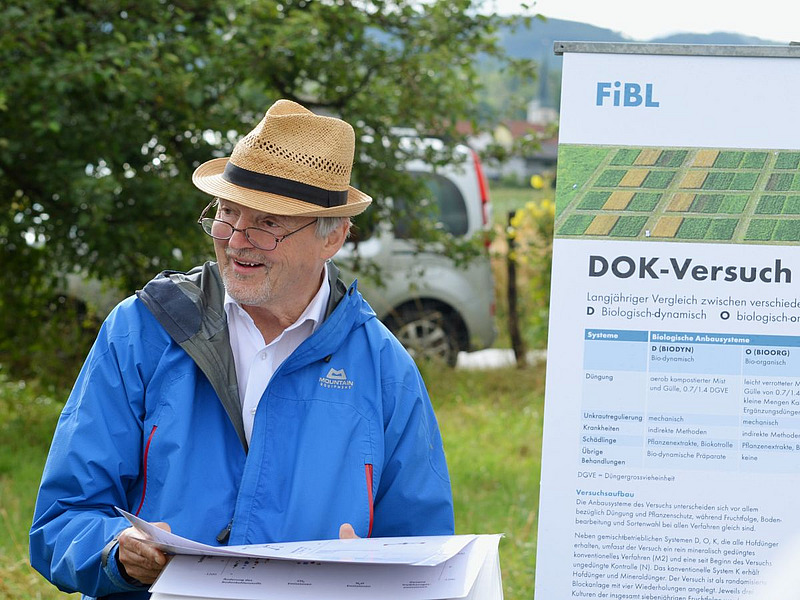
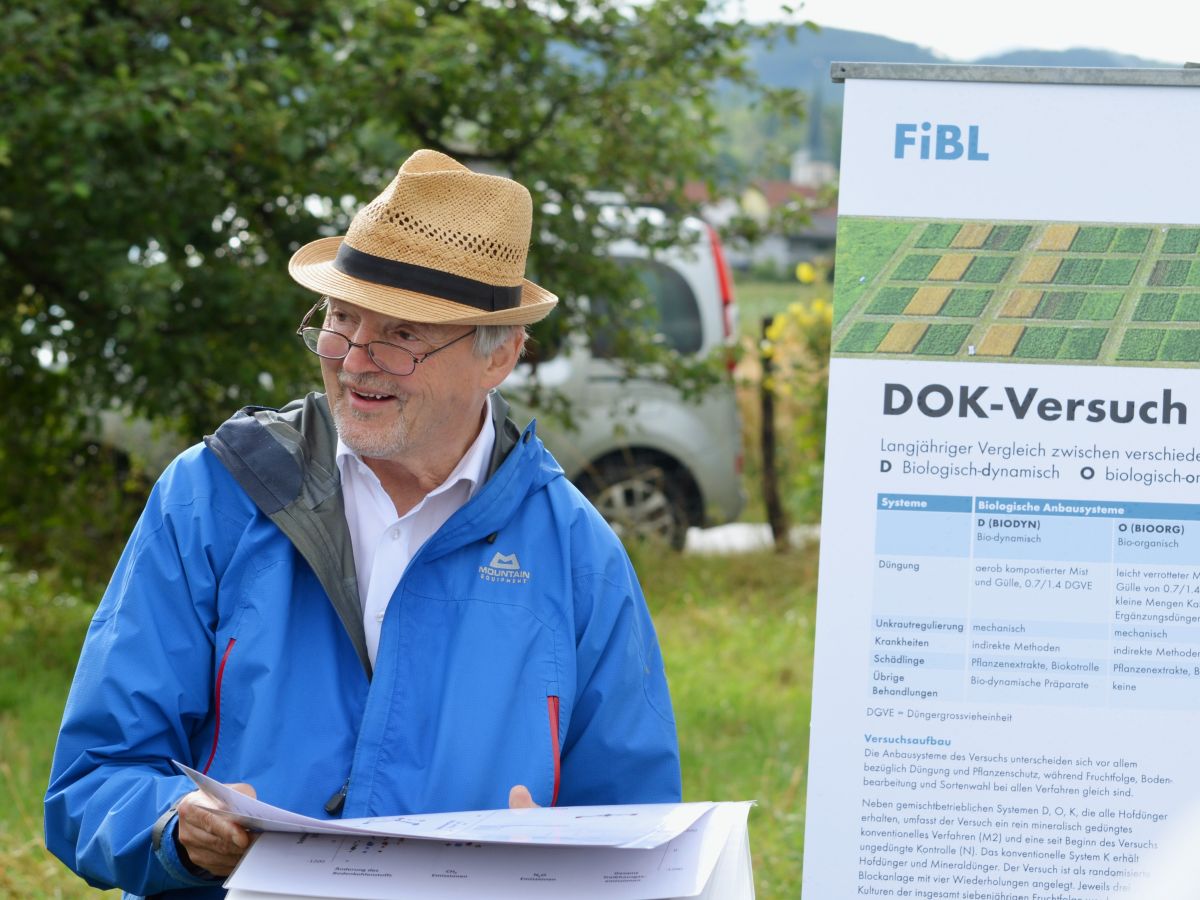
Since 1978, the DOK trial has been comparing biodynamic (D), organic (O) and conventional (K) cropping systems, with a group of conventional and organic farmers providing guidance and assistance. Data from the trial show that organic agriculture provides a solid foundation for advancing sustainable farming systems that give equal consideration to food production and environmental impact.
Beneficial for soil fertility
Animal manure and its processing are crucial for maintaining soil fertility. Under typical on-farm fertilization levels, humus content could be kept stable using farmyard manure. When manure was applied in composted form – as practiced in biodynamic systems – the humus content could even be increased. This has positive effects on soil structure, helps retain water, and reduces soil losses through erosion. At the same time, it stimulates soil life. Organic soils show higher and more diverse biological activity, which in turn supports greater biodiversity.
Efficiently produced yields
The data clearly demonstrate the importance of robust cultivars for increasing yields. They also demonstrate the efficiency of organic systems. On average, such systems produce 85 per cent of conventional yields without any use of chemically synthesised pesticides or artificial fertilisers.
Nitrogen is one of the most important plant nutrients, but it is also one of the environmentally most critical substances, as surpluses can end up in groundwater or be released into the atmosphere as greenhouse gases.
Paul Mäder and the DOK trial
Paul Mäder led the DOK trial from 1987 to 2023, guiding it to success. According to ScholarGPS, the FiBL researcher was in the top 0.05 per cent of scientists in 2024. A particular highlight of his career was the publication of a DOK study in the high-ranking research journal Science in 2002. This study has since been cited more than 4,000 times, marking a milestone that elevated the credibility of organic agriculture beyond
its research niche. Having retired in 2024, Paul Mäder handed over management of the DOK trial to a new generation: FiBL scientist Hans-Martin Krause is now in charge.
Franziska Hämmerli, FiBL
This article appeared in the FiBL Activity Report 2023/2024.