


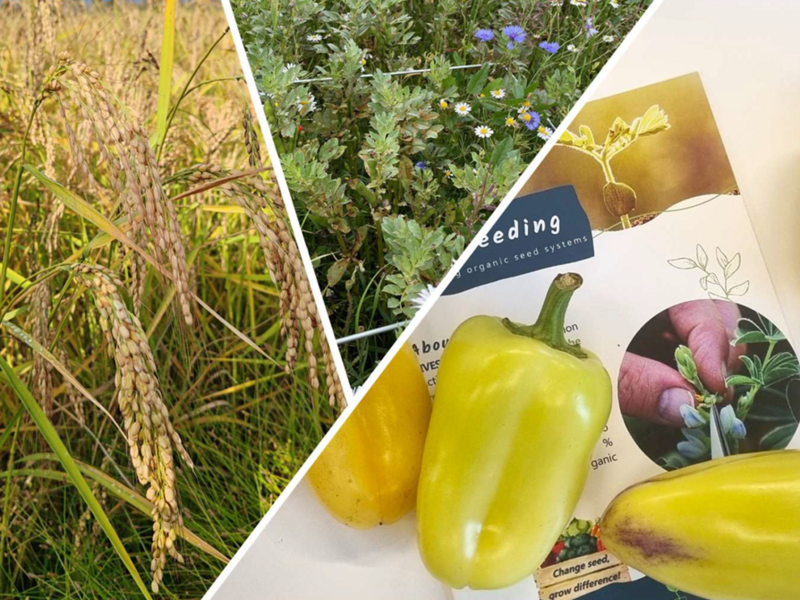
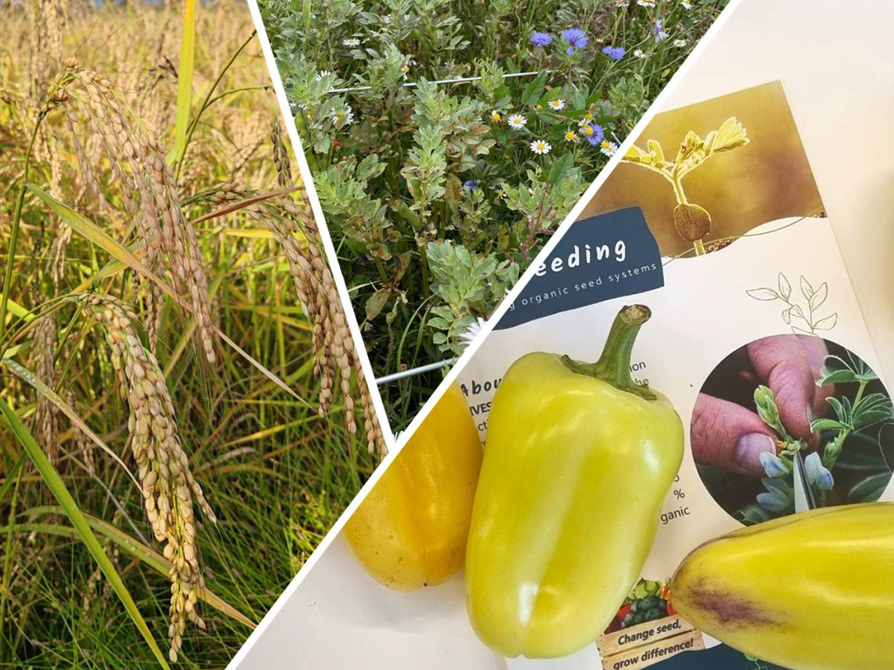
The LiveSeeding summer school will take place from 13 to 17 July 2026 in the Universitat Politècnica de València in Valencia, Spain. It is organised by LiveSeeding, a 4-year Innovation Action project that started in October 2022. Its goal is to accelerate the development of sustainable and diverse food systems in Europe through organic seed and plant breeding.
Training concept
The programme integrates agroecological principles with scientific concepts, emphasising their direct application in organic breeding. Through a combination of keynote lectures from leading experts, hands-on practical activities, on-farm demonstrations and collaborative group work, participants will explore the entire lifecycle of organic cultivar development and seed marketing. This includes characterising crop diversity, managing plant genetic resources, and applying classical, participatory, and molecular-based breeding methods to develop cultivars adapted to organic farming conditions. Furthermore, the summer school will cover policy aspects and opportunities around organic seeds, as well as the design of business initiatives for the sector.
Training objectives
The LiveSeeding summer school is offered to foster a new generation of professionals equipped to handle the complexities of organic seed systems. A key feature is therefore its focus on multi-actor and participatory approaches, encouraging interaction with farmers and other stakeholders to co-create solutions and bridge the gap between scientific research and practical application. The curriculum is designed to build technical skills and cultivate an understanding of entrepreneurship in the sector, preparing participants to bring innovative, resilient seed solutions to the market.
For details on the leaning objectives, as well as university credits (ECTS), participation fees and scholarships, please visit the project's website. Please note that the number of participants is limited to 30.
Further information
Contacts
Links
- liveseeding.eu: LiveSeeding "Trainings & summer school"
- liveseeding.eu: LiveSeeding "Summer school 2026 – Registrations are open!"
- survey.fibl.org: LiveSeeding Summer school 2026 – Pre-Registration