


The 2026 growing season has once again shown how strongly weather extremes can affect agriculture. At the same time, it faces a dual challenge: adapting to a changing climate while reducing greenhouse gas emissions and strengthening carbon storage.
Better soil cover can limit evaporation, improved nutrient cycling can reduce dependence on external inputs, trees can store carbon while providing shade, and more diversified production can help spread climatic and economic risks.
But no single practice can achieve all of this. The key question is therefore not simply which practice works but also which combinations of practices work together at farm level, under what conditions and in which timeframes.
Testing climate action on real farms
This is the starting point of the project "Development of Climate-Positive Organic Farming Models for Young Farmers in Korea and Switzerland", jointly led by FiBL and RDA.
The project combines complementary practices that contribute to adaptation, mitigation, or both. These combinations are developed around the needs and conditions of four young-farmer demonstration farms — two in Switzerland and two in South Korea — and will be implemented, monitored and assessed until 2028.
The approach fits closely with FiBL's thematic focus area "climate resilience" where solutions are developed together with farmers, generating scientific evidence under practical conditions and transferring knowledge rapidly from research into agricultural practice.
The farms behind the project
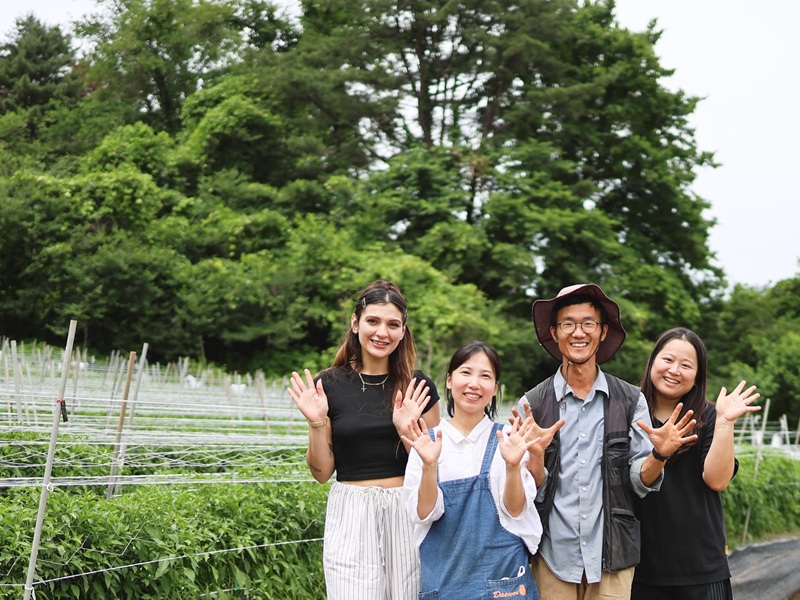
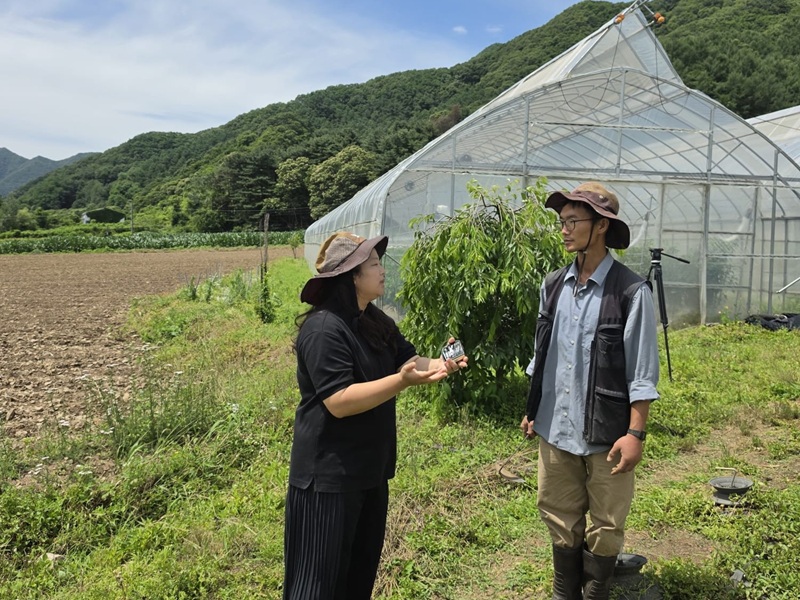
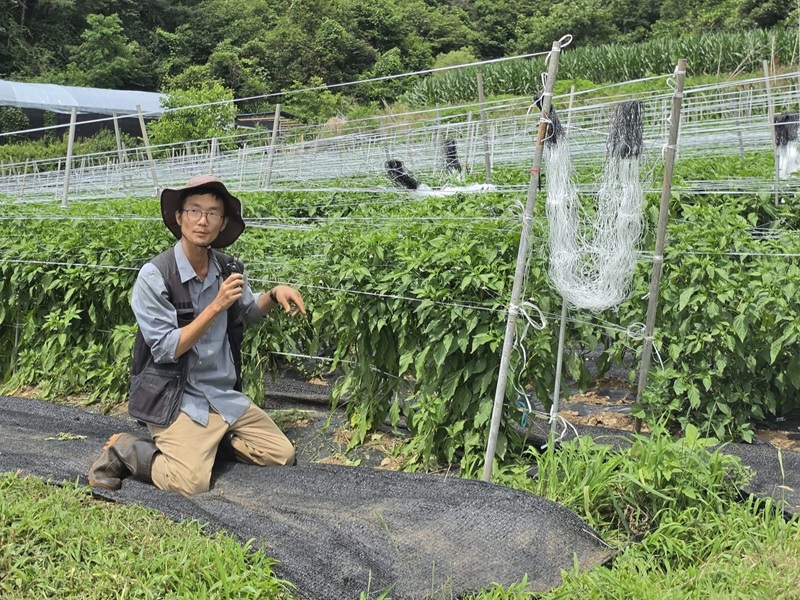
In Pocheon, South Korea, the Cheonui Baram Farm follows organic and biodynamic farming principles, with red pepper as a major crop alongside perilla and rice. The project is exploring how agroforestry can be further integrated with biodynamic management, soil fertility and water management. The aim is to investigate how trees and crops can work together to improve microclimate conditions, buffer heat and water stress, enhance biodiversity and strengthen the overall resilience of the farm.
The second Korean demonstration farm is centred on laying hens. Here, the project is developing a model that more closely connects livestock and crop production. Possible components include increasing on-farm feed production, recycling manure more effectively and integrating fruit trees into free-range areas. Trees could provide shade during hot periods while also contributing to biodiversity, carbon storage and additional farm income.
In Switzerland, the Sunnahof Farm provides a highly diversified biodynamic farming system. The farm combines vegetables, cereals, grassland, and more than 100 high-stem fruit trees with around 15 suckler cows and a small poultry flock. The links between crop and livestock production make the farm particularly interesting for questions around nutrient cycling, farmyard manure, soil fertility and the use of on-farm resources.
Biohof Guyer, the second Swiss demonstration farm, adds a strong agroforestry dimension. On only around eight hectares, the farm grows vegetables, potatoes, berries and flower meadows alongside approximately 300 high-stem fruit trees representing more than 100 varieties. Its youngest orchard was established as a syntropic agroforestry system, deliberately combining trees and annual crops on the same land. This creates an excellent setting for studying how tree and crop components interact in their use of water, nutrients and space, while contributing to biodiversity and diversified production.
Together, these farms provide four different environments in which combinations of practices can be developed and tested. All are managed by young farmers that want to make a step further in developing climate friendly and resilient agricultural practices.
Measuring more than carbon
The project will compare farm performance before and after implementation using both climate and farm-level indicators such as greenhouse gas emissions, soil carbon, nitrogen losses and energy use, alongside soil health, water management, biodiversity, productivity, labour and costs. Comparable indicators and monitoring protocols will allow results from South Korea and Switzerland to be interpreted within a common framework.
On crop farms, monitoring can include yield and quality, soil cover, organic inputs, irrigation, soil moisture, soil organic carbon and fuel use. In livestock-integrated systems, feed self-sufficiency, purchased feed, manure and compost management, nutrient recycling and animal performance can also become important indicators.
But one question remains just as important as the environmental measurements: Would a farmer actually adopt them?
A measure that reduces emissions but requires excessive labour, major investment or unacceptable production risk may have little practical value. The project therefore considers affordability, realistic labour requirements, measurable effects, production risk and adoption potential when selecting practices.
From four farms to practical knowledge
The demonstration farms are not intended to produce fixed blueprints that can simply be copied elsewhere. Instead, they provide a way to identify which combinations work, under which conditions, what benefits they provide and where the trade-offs lie.
Although agriculture in South Korea and Switzerland differs considerably, many of the practical questions are remarkably similar: How can soils retain water more effectively? How can nutrients be recycled more efficiently? How can crops and animals cope better with heat? And can dependence on external inputs be reduced without compromising production? And how can organic, climate-friendly and resilient agricultural production be marketed to provide a farmer's income to live from?
By addressing these questions on real farms and comparing the results across two countries, the project aims to turn the experience of four individual farms into knowledge that can be adapted and used much more widely.
Further information
Contacts
Links
The project "Development of Climate-Positive Organic Farming Models for Young Farmers in Korea and Switzerland" in the FiBL project database