


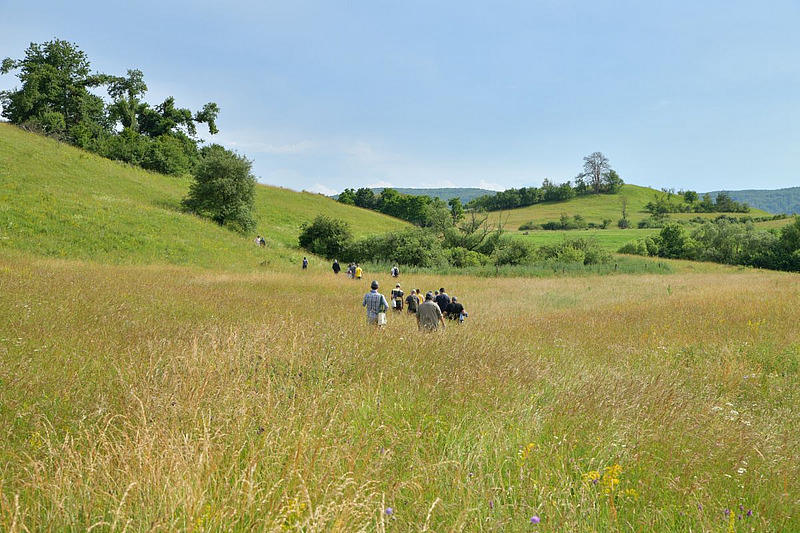

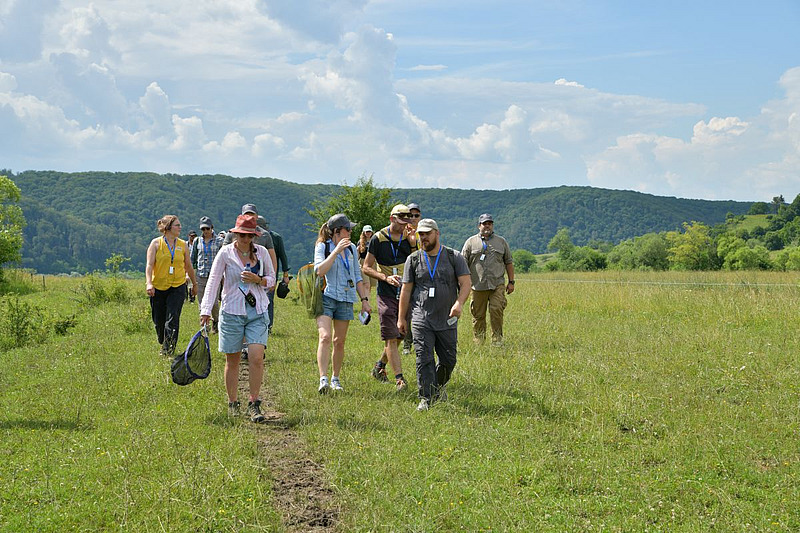
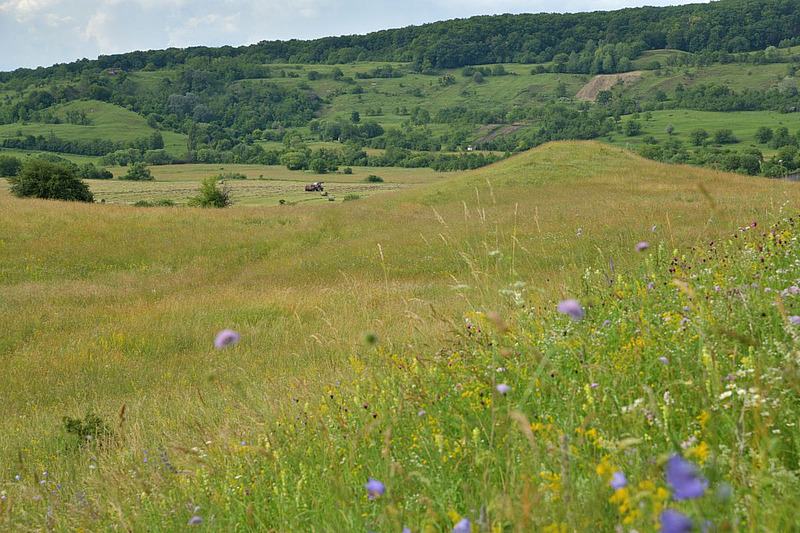
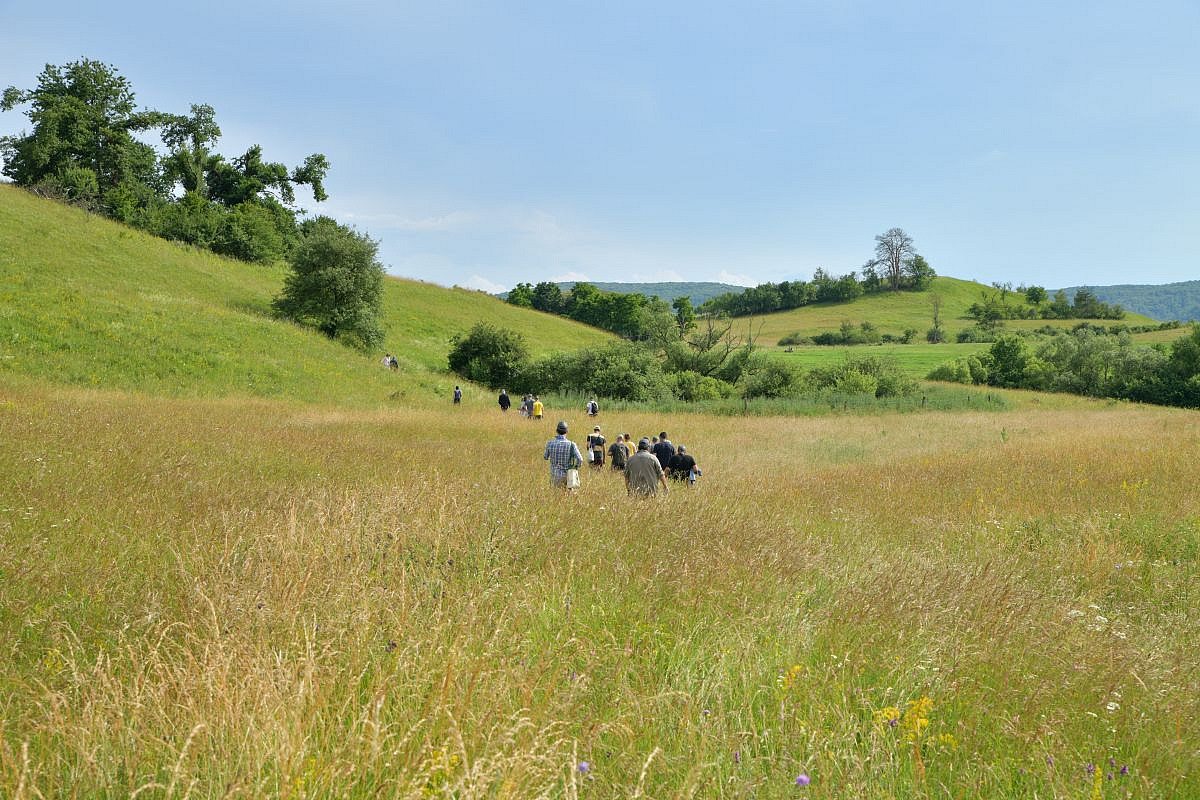

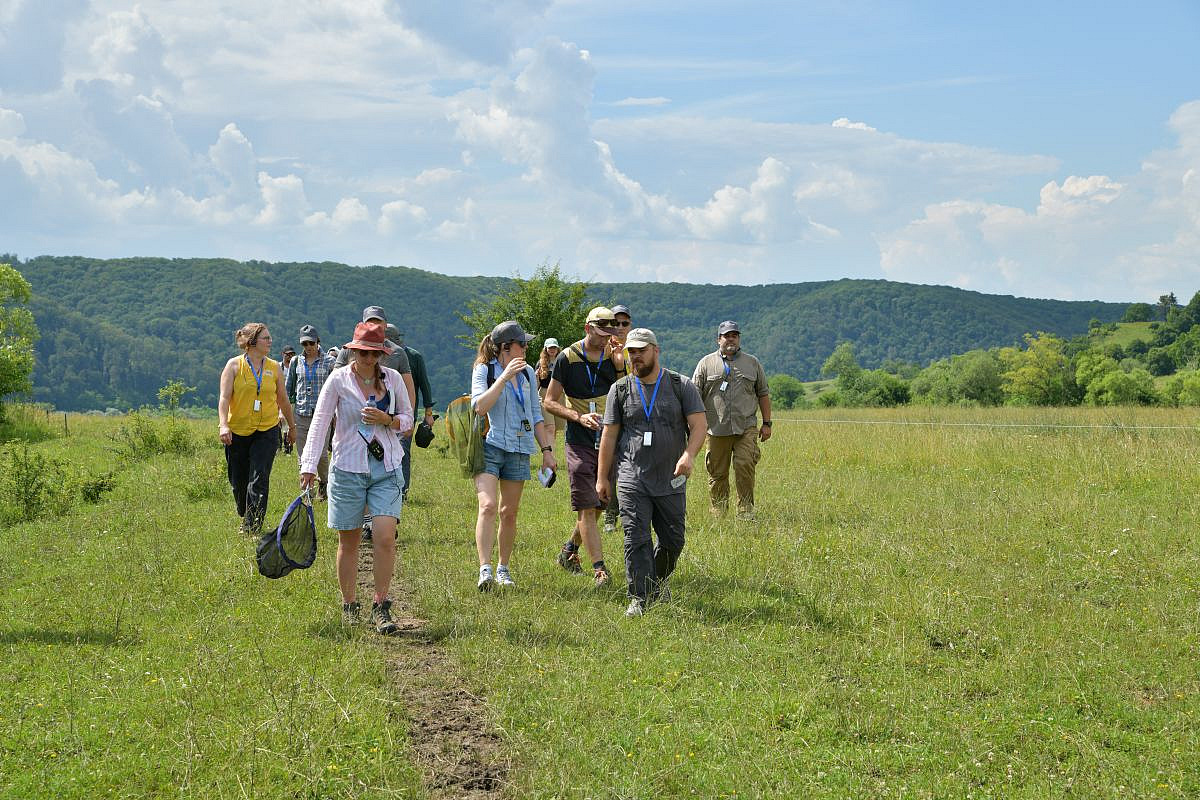
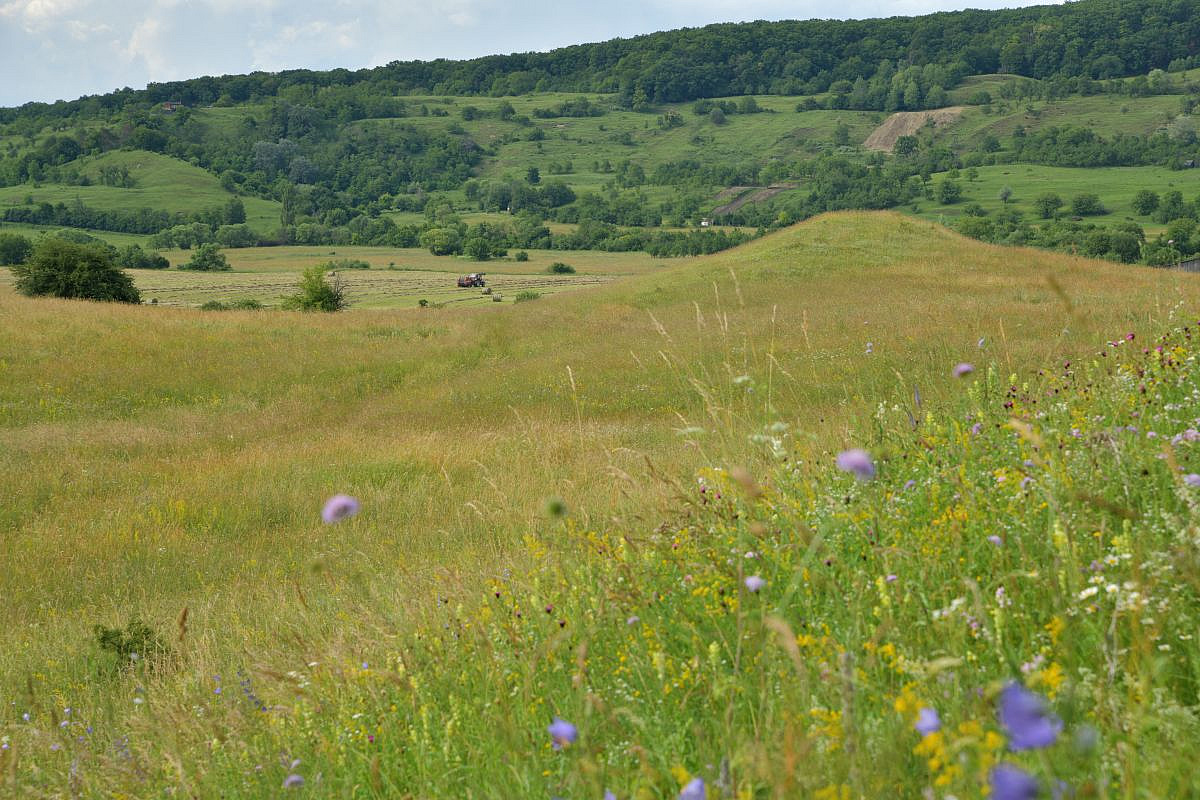
There was a constant hum all around, and the array of scents and colours was varied and vibrant. The tour of the species-rich grassland made a lasting impression. "Here you can really sense the biodiversity", was one of the participants' conclusions.
The European-funded project aims to enhance biodiversity-friendly farming practices across Europe by stimulating knowledge exchange among farmers, foresters, researchers, advisors, and other key stakeholders.
Valuable exchanges for practical application
The opportunity for discussion during this field trip was greatly appreciated: "As a farmer, I usually work on my own a lot", said one participant, explaining his interest in the event. And a female farmer added: "It's good to see that there are others who are so passionate about biodiversity."
The farmers seized the chance to take part despite the busy summer season: "With all the work we have to do, it's important to get out and about every now and then to learn something and also find new inspiration", said a couple from Romania with conviction.
"For me, this is a unique opportunity for discussions and information exchange", explained Sebastian Aldea, who gave the group a tour of his dairy farm, the Albești SEBAL Farm. His message was essentially: "First of all, we have to value ourselves and our work, and through this we let the consumers appreciate our products".
Biodiversity and economic viability
Cristi Gherghiceanu, managing director of ADEPT (Romanian non-governmental organisation), explained: "In our opinion, hay meadows are the hotspot of biodiversity". The primary aim of the Angofa Farm, run by ADEPT, is to enhance biodiversity. Nevertheless, the farm operates profitably: "We generate profits through public funding, through the processing of regional food products, and with the help of additional funds from private donors", explained Gherghiceanu.
During the field trip, it became clear just how important the exchange of ideas is across stakeholders from the fields of advisory services, research and practical farming when it comes to biodiversity. Details on the economic context and organisational structures were particularly important to the participating farmers. This entrepreneurial perspective contributes to a holistic view of biodiversity measures. "Measures can only work in the long term if they are also economically sustainable", said one participant.
Dependence on agricultural subsidies
Farms in Romania viewed their heavy reliance on public funds as a problem. "Our goal is to be economically sustainable even without public subsidies", explained Cristi Gherghiceanu. "Farmers need to diversify to be economically independent". According to Gherghiceanu, without public funding, half of Romania's farms would disappear.
Decisions on agricultural policy are often unpredictable, and many support measures do not stand up to critical scrutiny from a practical perspective.
ADEPT seeks to identify problems in the regional value chain and find solutions, for example by filling gaps in the infrastructure. This can only be achieved through collaboration: "As an NGO, we must include farmers in order to be successful," summarised Gherghiceanu.
Remaining traditional practices
During the field trip, participants gained insight into the wide range of modern and traditional agricultural practices in Romania. "We are facing intense price pressure from other EU countries and from overseas," commented Sebastian Aldea, who is therefore trying to produce as cost-effectively as possible.
On the other hand, traditional working methods are still very much alive. During a visit to the communal grazing organisation in Viscri, the group met the shepherd responsible for the Romanian Fleckvieh herd. The association still operates communal grazing, as was once common in many parts of Europe. In the evening, back in the village, the animals separate and make their own way back to their home barn.
The difference compared to a more modern dairy farm is, however, enormous: "These Romanian Fleckvieh cattle, which spend a lot of time grazing, produce around 3,000 to 4,000 litres of milk per year", explained Dietmar Gross, a board member of the grazing organisation. By comparison with the standard Western European dairy cow, which produces between 8,000 and 10,000 litres of milk a year, that is a very low yield. However, Sebastian Aldea pointed out that grazing improves the quality of the milk's nutritional content. Which leaves us with the question: how do we want to feed ourselves, and who will pay for it?
A valuable resource for the whole of Europe
Ultimately, Romania's species-rich meadows and pastures are also a treasure and an important resource. After visiting the Angofa Farm, one participant summed up her impressions as follows: "The biodiversity here is extraordinary. We hope you can preserve it for the whole of Europe."