


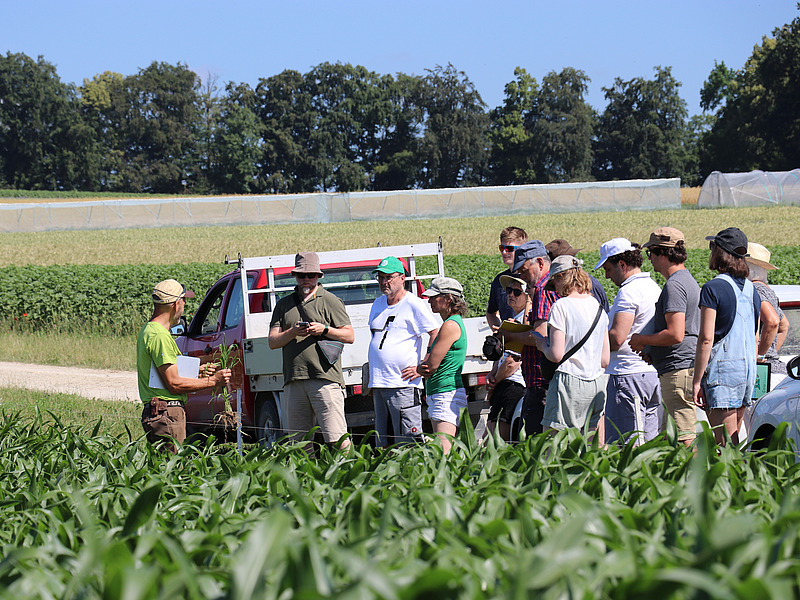
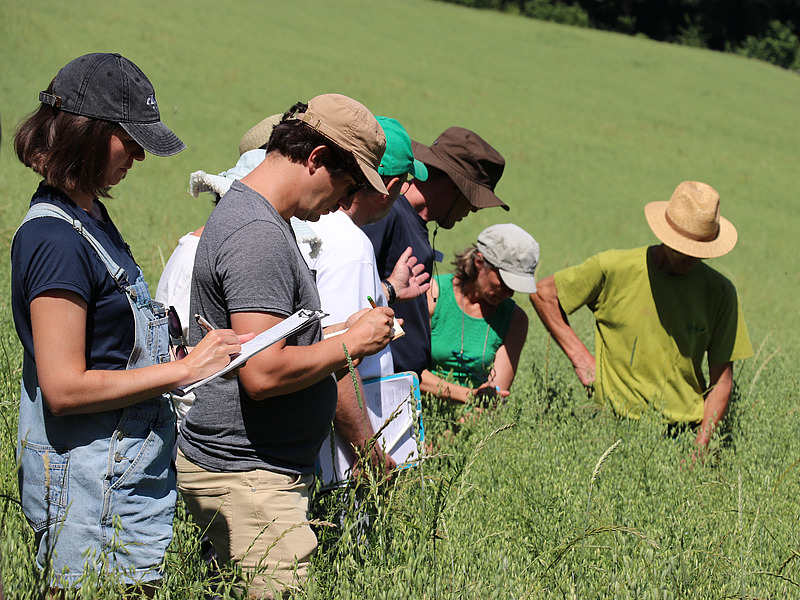
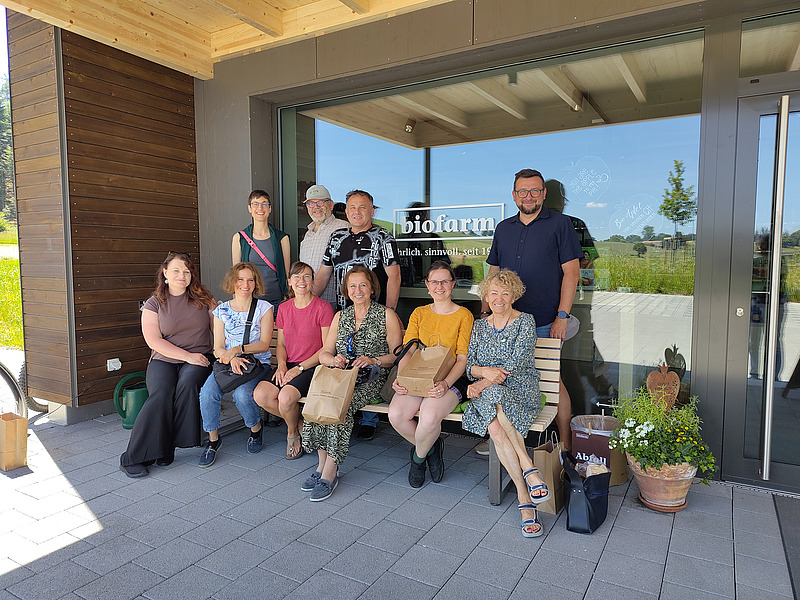
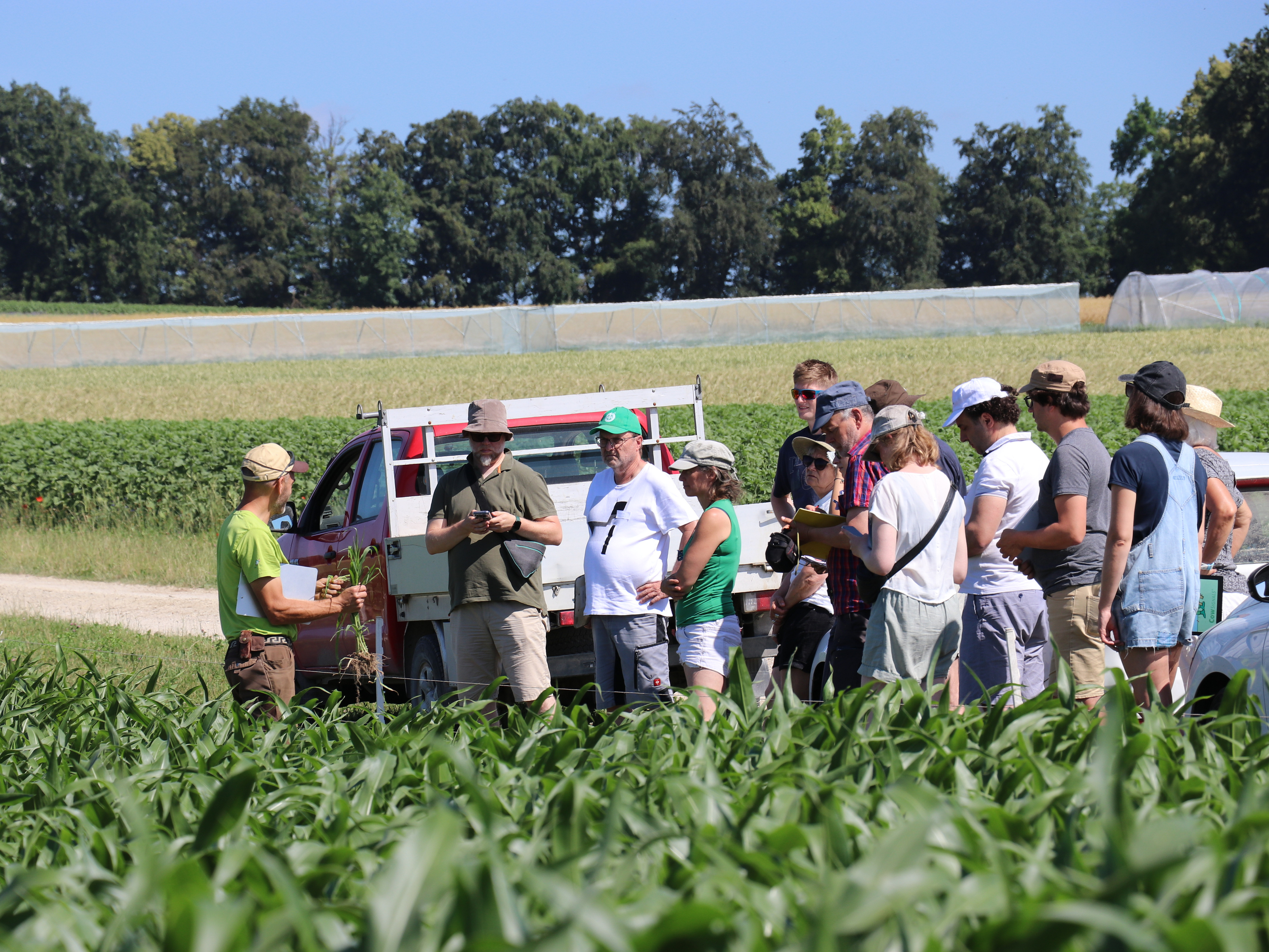
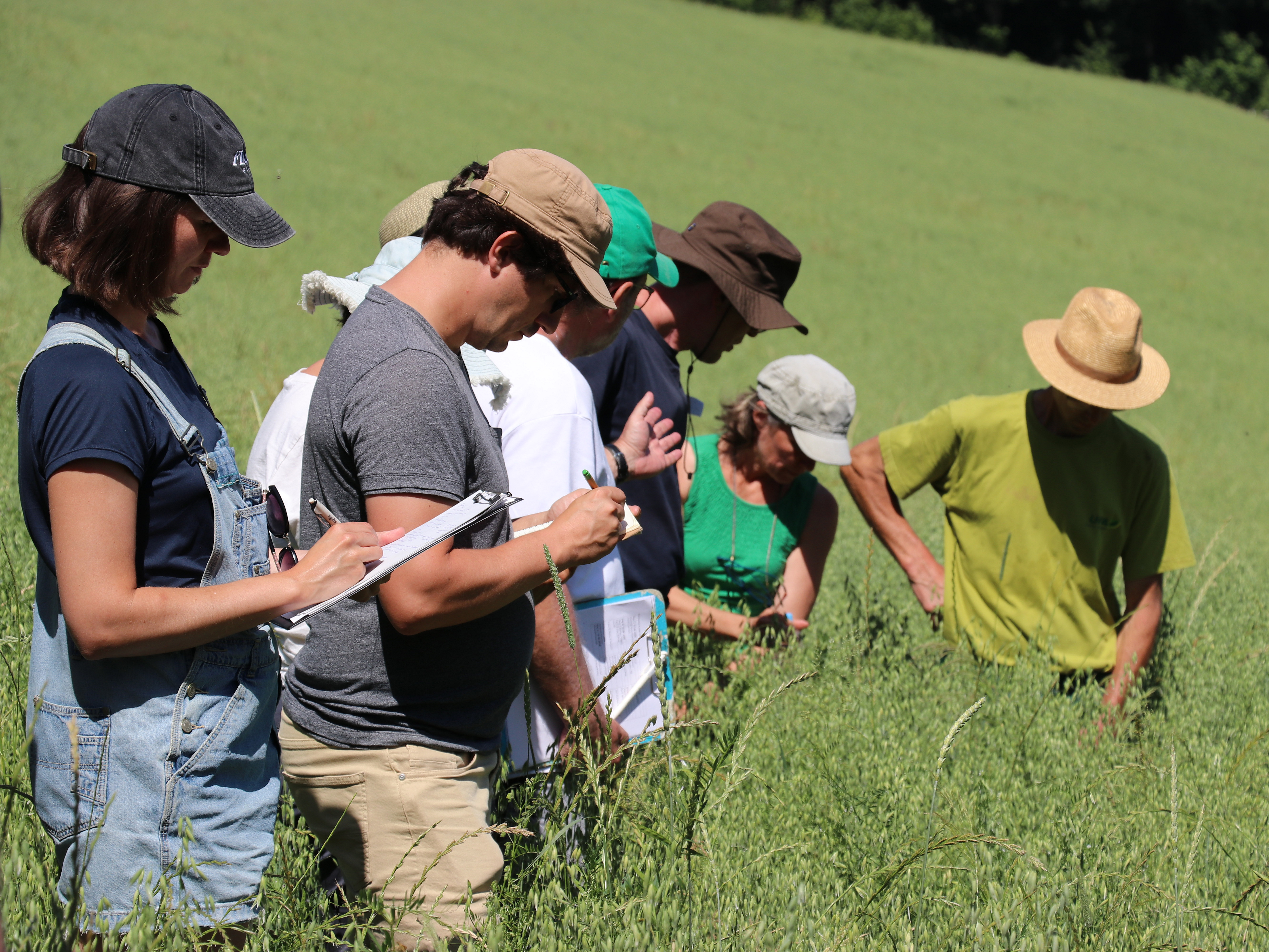
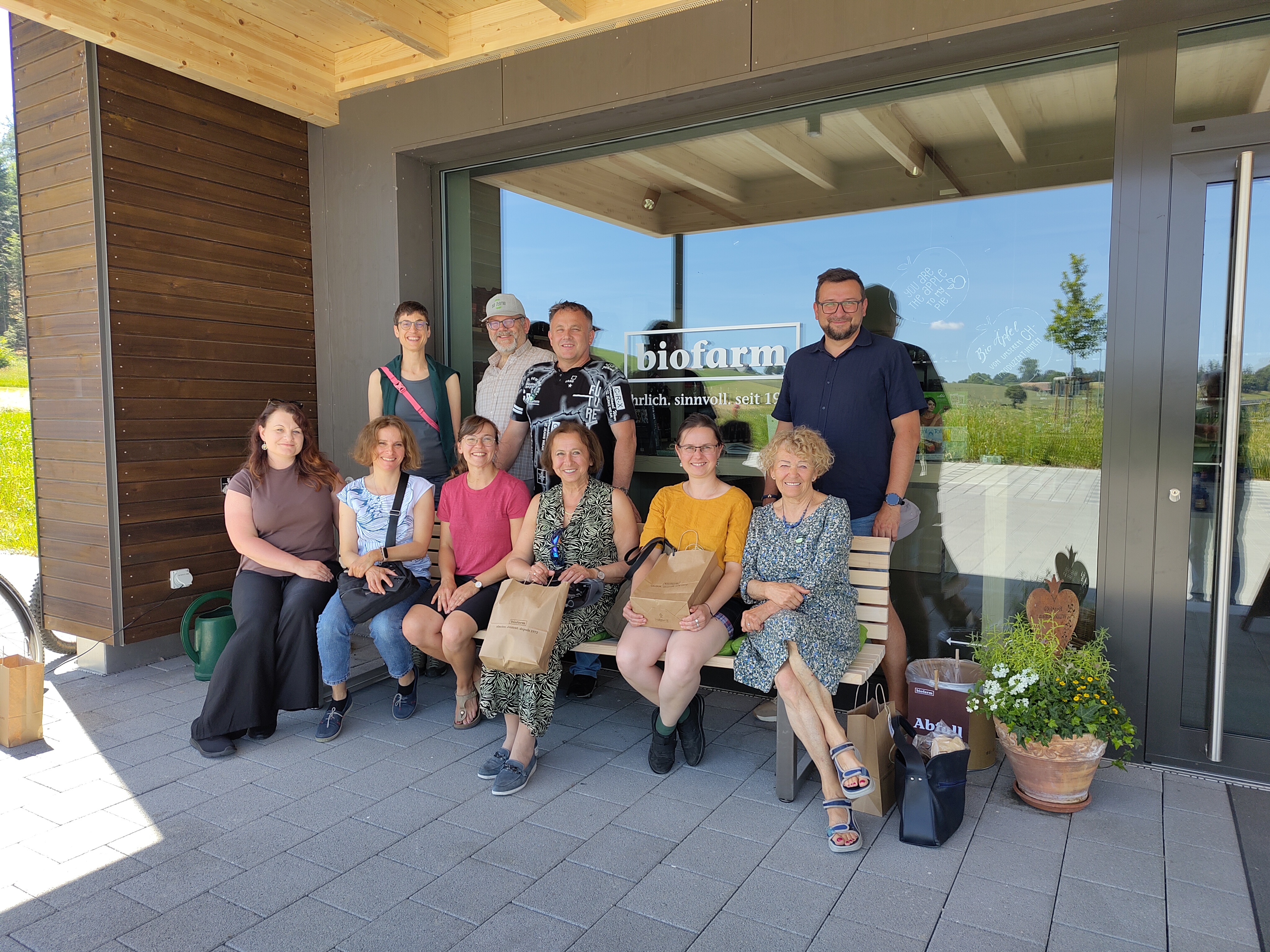
Over the course of three days, participants from the EU projects Organic Advice Network and Organic Yields Up visited a variety of farms, the DOK trial site in Therwil, Baselland, and the Swiss Organic Arable Farming Days at the Katherinental estate in Diessenhofen, Thurgau.
Participants from a total of eleven European countries engaged in in-depth discussions with experts at the sites they visited, covering topics such as farming systems, supply chains and the day-to-day challenges of organic arable farming. The discussions also touched on differences in farming techniques, climate, and policy across the various countries. This form of practical exchange is referred to as a 'cross visit' within the EU projects and takes place several times in different countries across both projects.
Farm visits: A valuable exchange
Three farm tours per project covered the practical focus of the cross visits. At each farm, the owners presented their strategies for crop rotation, tillage, weed management, and nutrient supply. Participants found it particularly insightful to see how the farms responded differently to similar problems, whether in dealing with weeds, using catch crops and undersown crops, or in farm management.
There were repeated discussions about which solutions could be applied to their own regions and what site-specific limitations there are. These comparisons made it clear that there is rarely a single correct answer in organic arable farming.
The DOK trial: Using long-term data as a common language
Since 1978, FiBL and Agroscope have been comparing biodynamic, organic and conventional farming systems under identical conditions in the DOK trial. A visit to the long-term trial offered participants a solid ground on which to discuss soil fertility, humus formation, yields, and the environmental impact of the various systems. The robust data from over four decades of practical research provide a unique foundation for continuing to champion organic farming. Hans-Martin Krause, who leads the DOK trial on behalf of FiBL, welcomed suggestions on how to ensure the trial's continued relevance to practical farming.
Organic Farming Days: Practice and networking
The cross visit concluded with a visit to the Organic Farming Days event. Daniel Vetterli, a member of the organising committee, welcomed the group and guided them through the field demonstrations with technical discussions. By interacting directly with practitioners, researchers and advisers, the group gained insight into Swiss organic farming.
Although the thematic areas varied greatly, the unifying element was the dialogue between participants. During breaks, conversations arose that touched on topics such as advisory methods and the further development of organic arable farming across Europe, going beyond the technical programme. The cross visits aim to facilitate precisely this kind of cross-border exchange, which is why the visit to Switzerland can be called a great success.
Authors: Bernadette Oehen and Maike Krauss, FiBL
Further information
Contacts
- Bernadette Oehen (Organic Advice Network)
- Maike Krauss (Organic Yields Up)
Links
- fibl.org: Project "Organic Advice Network" in the project database
- fibl.org: Project "Organic Yields Up" in the project database
- OrganicAdviceNetwork.eu: Project website Organic Advice Network
- OrganicAdviceNetwork.space: Online discussion and learning forum for the Organic Advice Network
- OrganicYieldsUp.eu: Project website Organic Yields Up