


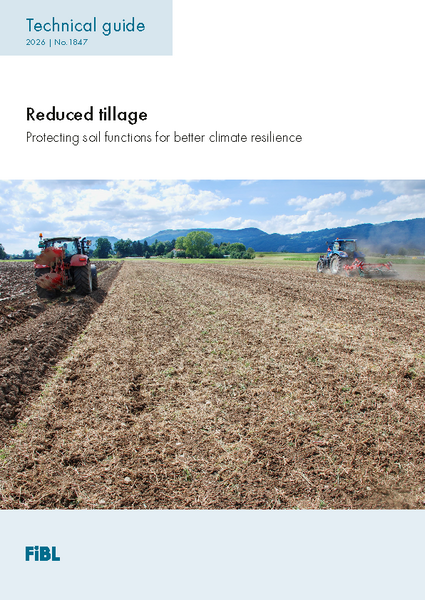
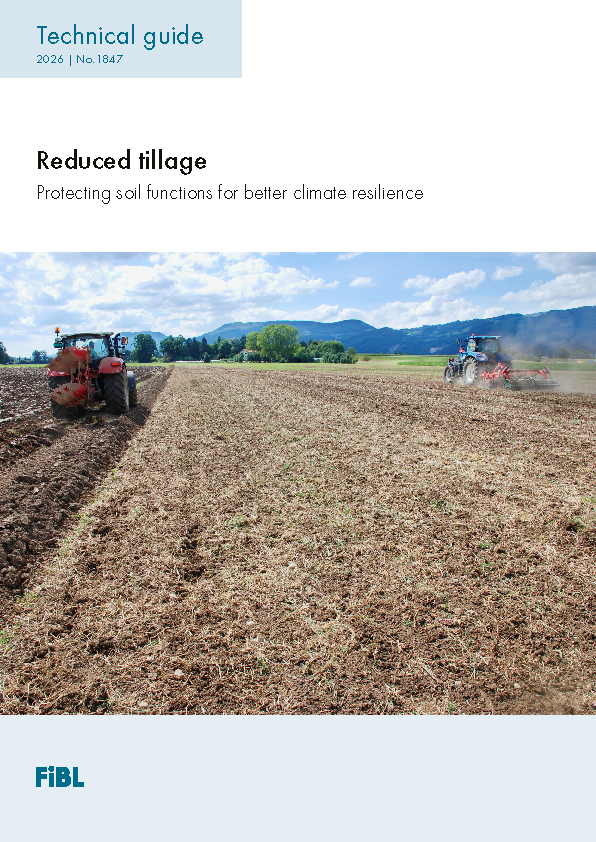
Healthy soil is the basis for human nutrition and an important ally in the fight against climate change. However, intensive tillage can damage the soil. Reduced tillage is one approach to protecting the soil, improving its structure and strengthening its ability to store water and sequester CO₂. FiBL has conducted extensive research into the effects of reduced tillage in organic farming over many years.
New technical guide
The new technical guide "Reduced tillage. Protecting soil functions for better climate resilience" highlights the advantages and disadvantages of reduced tillage in organic farming. It describes the methods and presents suitable equipment. Farmers receive specific recommendations on how to start using ploughless systems to ensure soil fertility and yields in the long term. The challenges of abandoning the plough in herbicide-free systems are also discussed in detail and solutions are presented.
This technical guide was produced as part of the KLIMACrops project (Strategies for adapting arable farming systems to climate change and their contribution to climate protection in the Upper Rhine region) and the NBSOIL project (Nature-Based Solutions for Soil Management). The English translation of the original German edition was realised with support of the OrganicClimateNET project. This was funded by the European Union and the Swiss State Secretariat for Education, Research and Innovation (SERI), among others.
Further information
Contact
Links
- fibl.org: Techincal guide "Reduced tillage"
- nbsoil.eu: Website Nature-based Solutions for Soil Management
- organicclimatenet.eu: Project website