


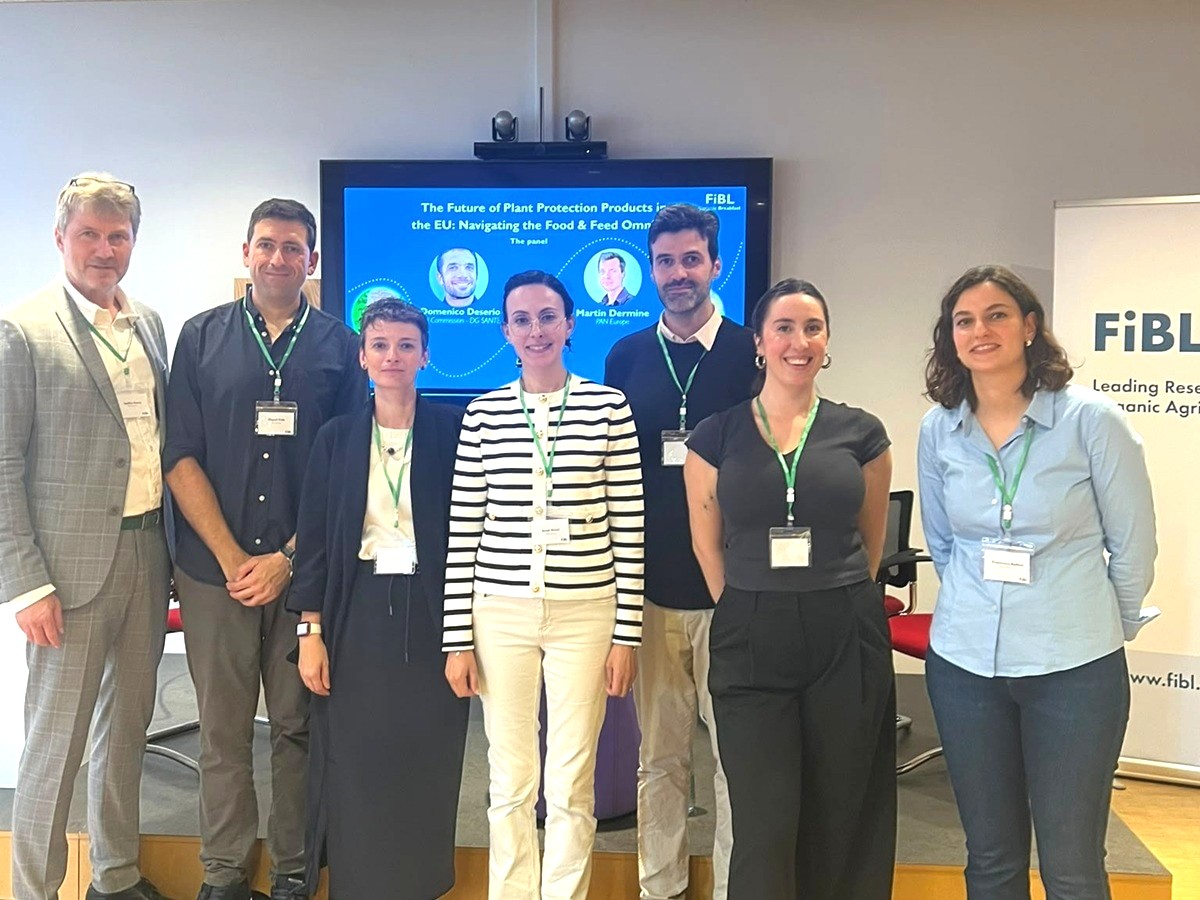
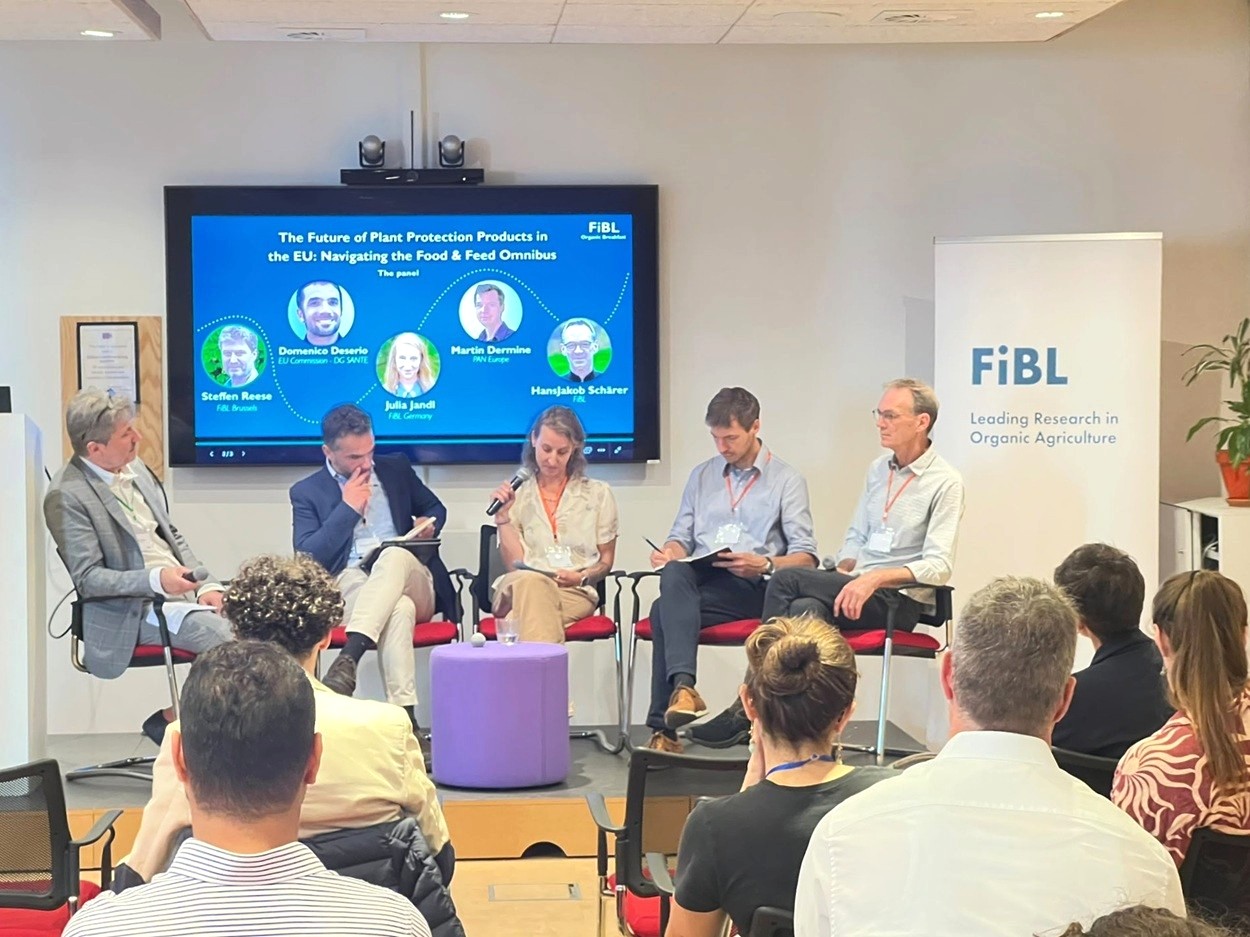
Moderated by Steffen Reese, Co-Managing Director of FiBL in Brussels, the roundtable brought together Domenico Deserio, Policy Officer at the European Commission's DG SANTE; Julia Jandl, FiBL in Germany; Martin Dermine, Executive Director of PAN Europe; and Hans-Jakob Schärer, FiBL in Switzerland.
The discussion focused on the changes proposed under the Food and Feed Omnibus, particularly the future approval and renewal of active substances, the regulatory framework for biocontrol, and how Europe can accelerate access to innovative plant protection solutions while maintaining high standards of protection for human health and the environment.
Different resources, new knowledge and continuous investment
One of the main points of debate concerned the proposal to allow permanent approvals for certain active substances under specific conditions. Domenico Deserio explained that, from the European Commission's perspective, the proposal is not intended to lower current safety standards, but to free up risk-assessment capacity where periodic reassessment provides limited additional safety value. These resources could instead be allocated to areas where they are most needed, including the assessment of new biocontrol active substances.
Julia Jandl from FiBL in Germany highlighted the importance of continuously collecting scientific evidence on active substances and ensuring that new knowledge can inform regulatory decisions. While acknowledging the capacity challenges of the current review system, she stressed the need to consider both environmental impacts and whether products remain effective over time. Reduced efficacy could lead farmers to apply larger quantities, potentially increasing environmental pressures, including groundwater contamination.
From PAN Europe's perspective, Martin Dermine questioned whether the proposed simplification would provide sufficient incentives for farmers to transition towards more sustainable alternatives. He stressed the importance of continuous investment in research and new scientific knowledge and raised concerns that the proposed definition of biocontrol may be too broad to effectively support the transition away from chemical-intensive plant protection.
Looking beyond individual products, Hans-Jakob Schärer from FiBL emphasised that sustainable plant protection should not simply mean replacing one product with another. Biocontrol should instead be integrated into a broader strategy combining solutions such as resistant varieties, crop rotation, biological control and other agronomic practices. He also highlighted the substantial research and evidence already available on biocontrol and its contribution to productive agriculture within healthy ecosystems.
Biocontrol as part of a bigger picture
Despite the different perspectives around the table, a common priority emerged: advancing effective biocontrol solutions and making them more accessible to farmers. At the same time, biocontrol should not be seen as a silver bullet, but as part of a more holistic approach to sustainable plant protection.
Ultimately, the discussion highlighted the balance at the heart of the current policy debate: how to reduce unnecessary administrative burden and accelerate regulatory processes without compromising human health and environmental protection.
The exchange continued with questions and contributions from participants and, in keeping with the tradition of the event, over an organic breakfast. FiBL in Brussels thanks the speakers and all participants for contributing to this year's discussion and looks forward to continuing the conversation on the future of sustainable plant protection in Europe.
Further information
Contact
Link
fibl.org: FiBL Europe in Brussels