


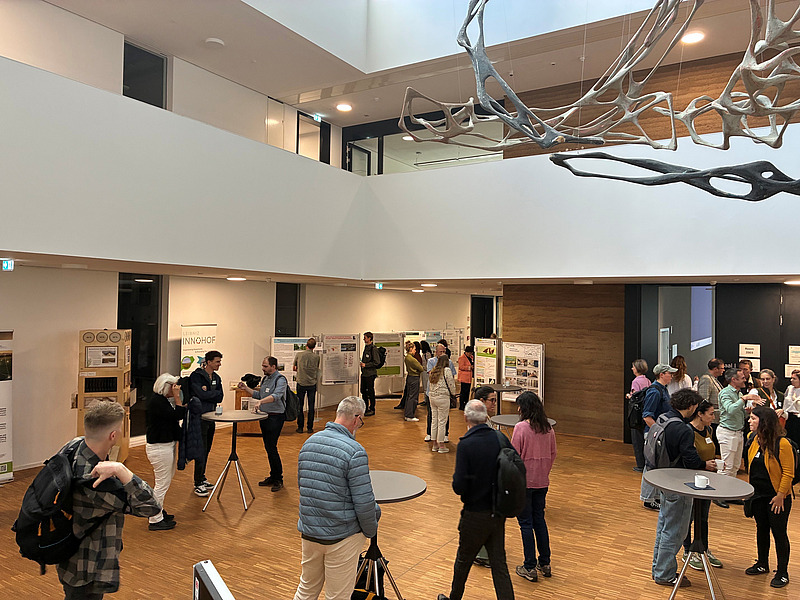
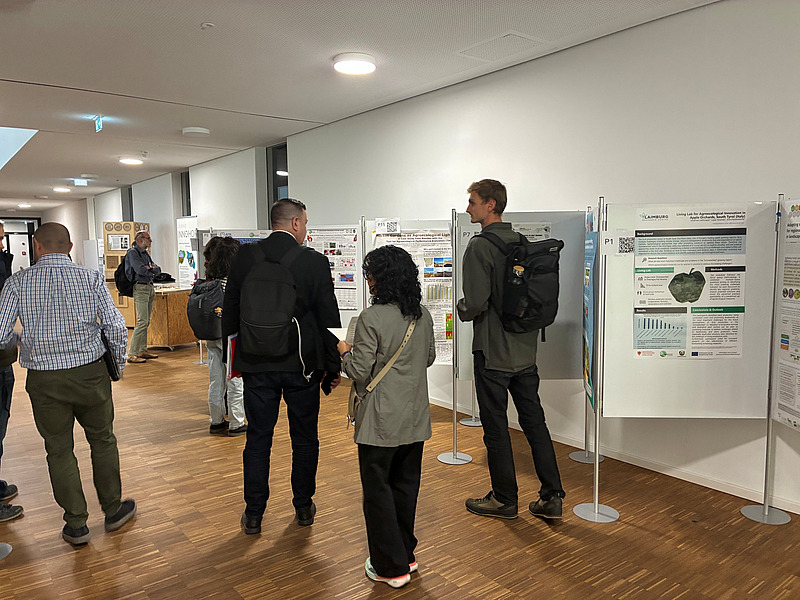
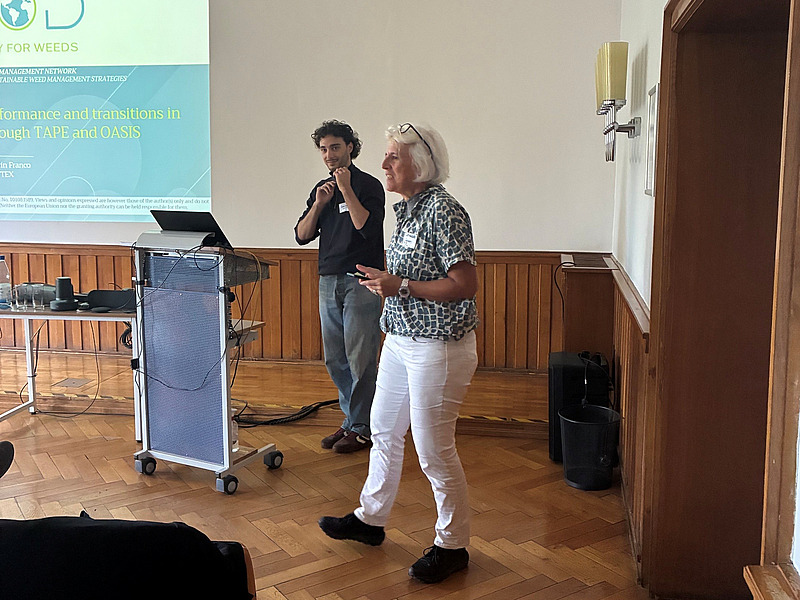
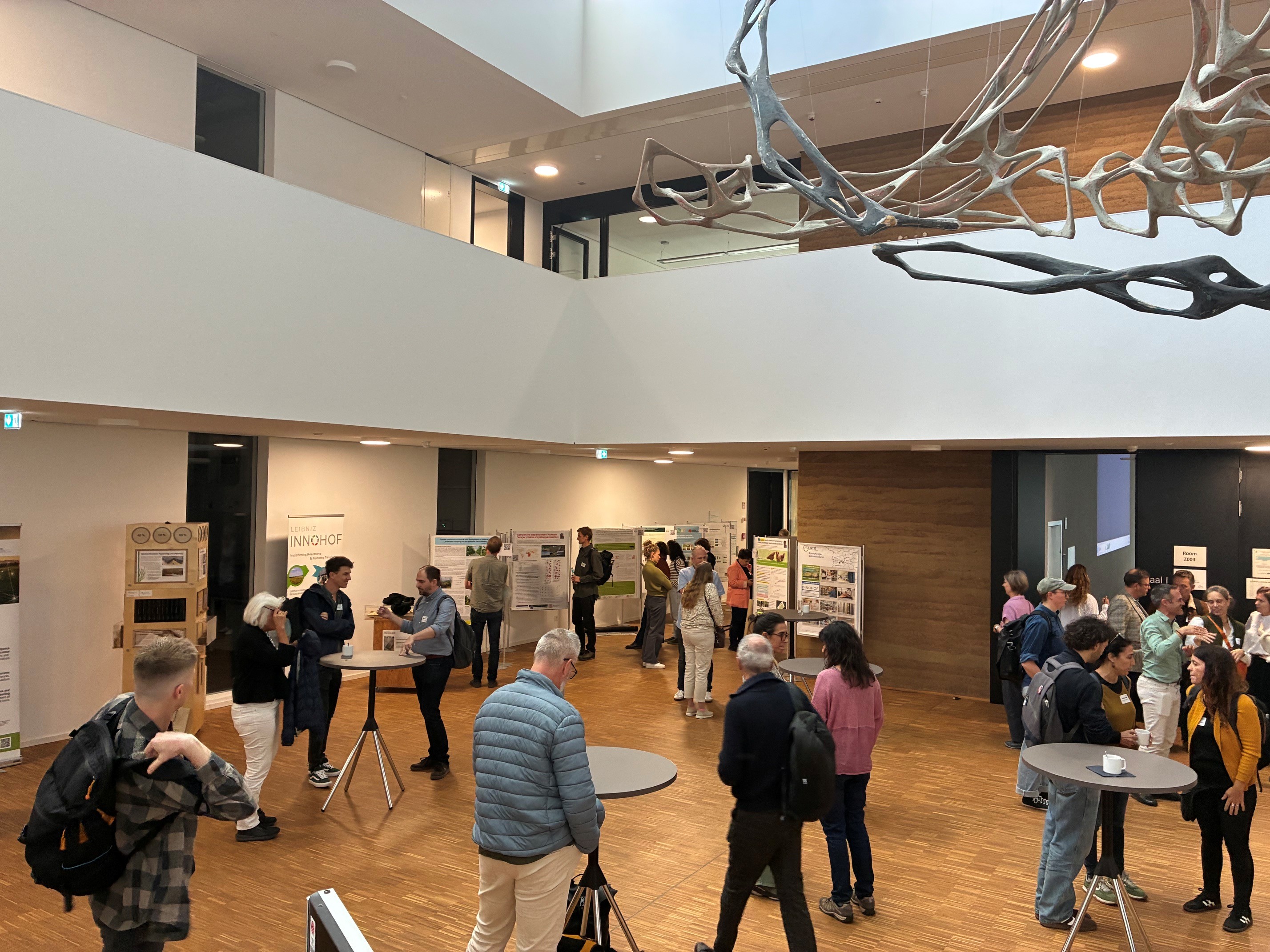
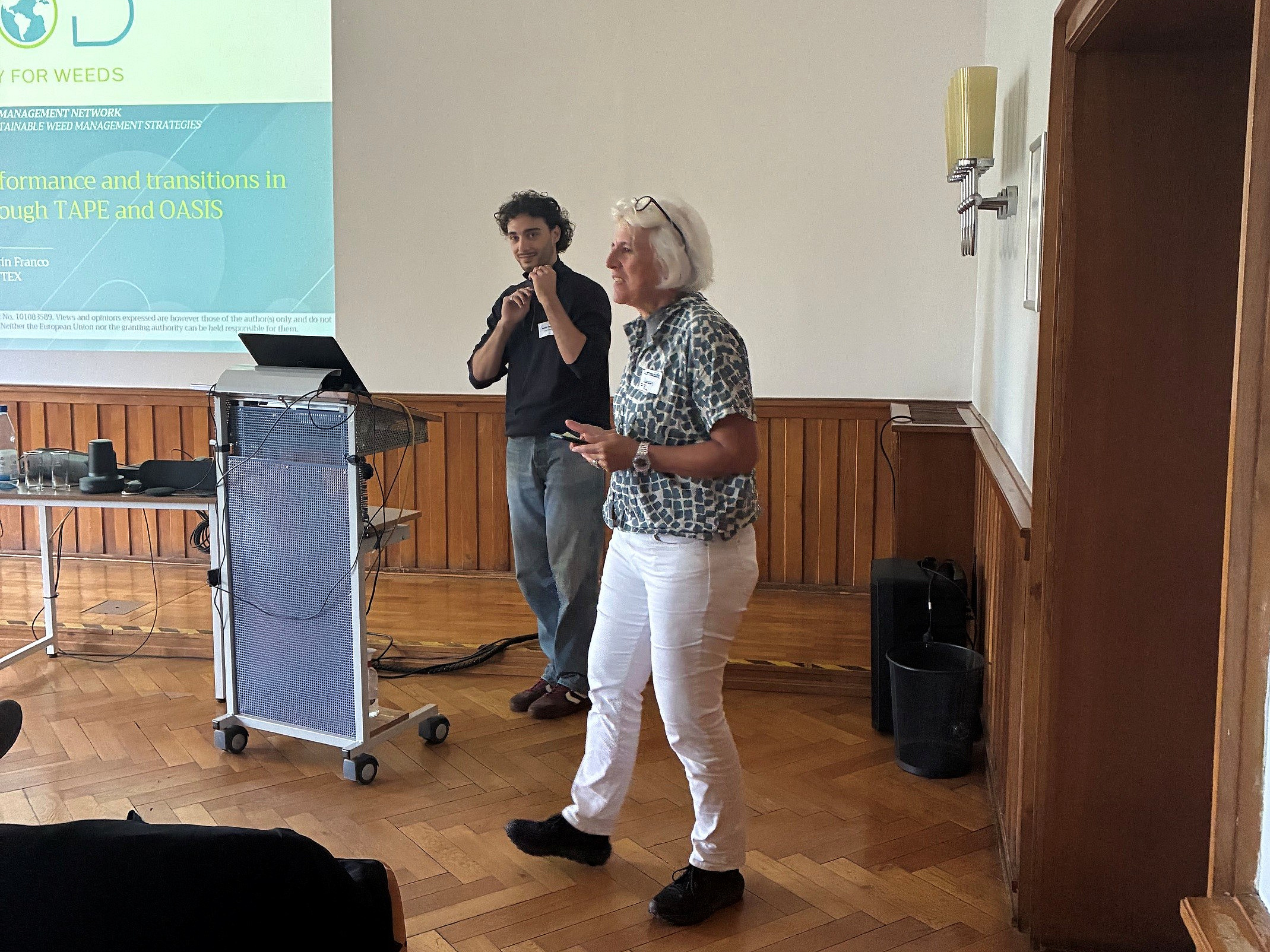
The first Summit of the European Network of Agroecology Living Labs and Research Infrastructures took place at the Leibniz Institute for Agricultural Engineering and Bioeconomy (ATB) in Potsdam, Germany, on 6 October 2026. Organised within the European Partnership on Agroecology, it brought together around 75 representatives of full and emerging Network members from across Europe.
Eighteen presentations in six parallel tracks covered topics as climate-resilient farming, ecosystem services and public policies, institutionalisation and agroecological change. A recurring message was that co-creation involving many different stakeholders must begin when research questions and experiments are designed.
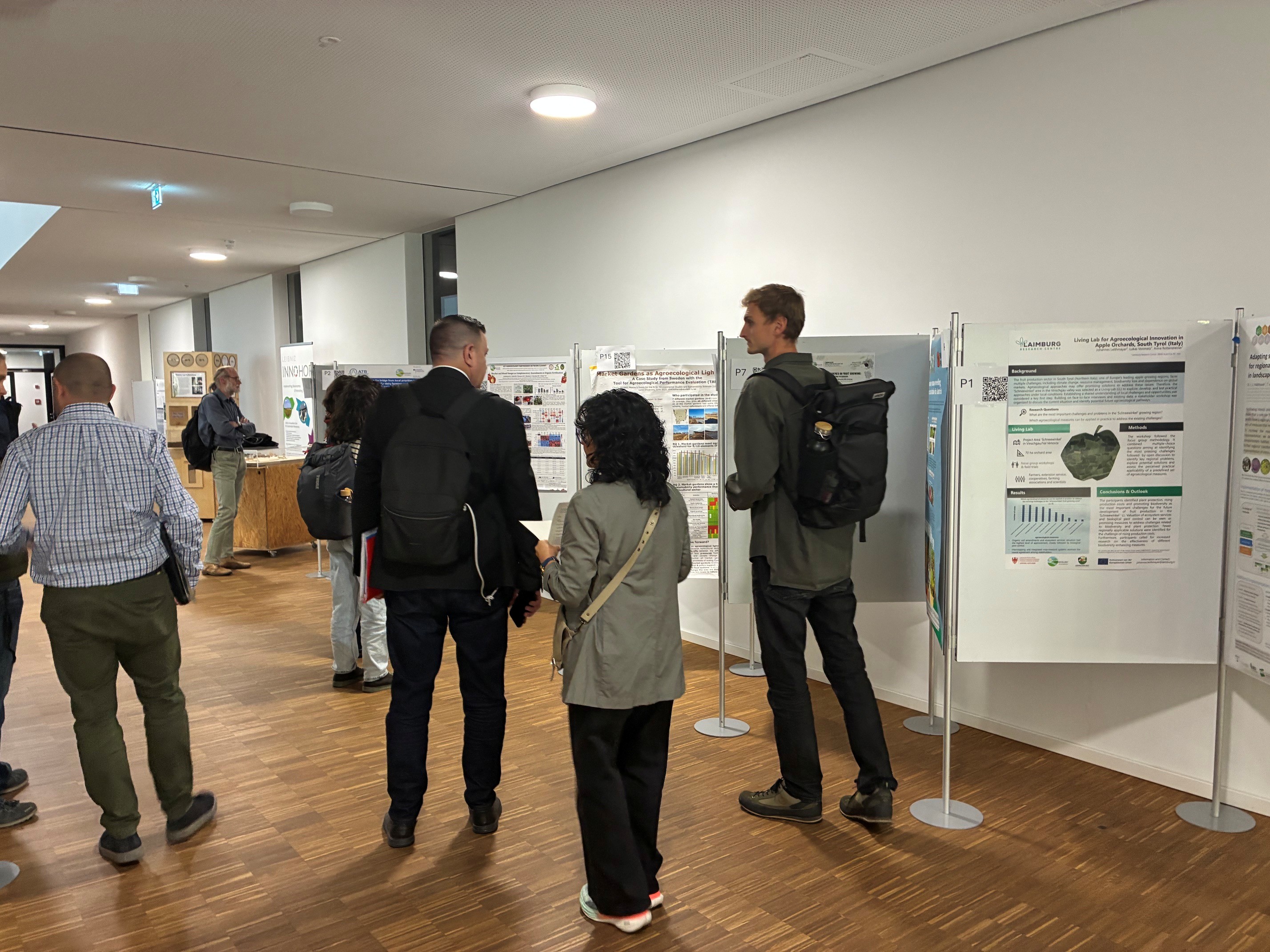
Posters and FiBL contribution
Poster sessions provided further opportunities for exchange. FiBL contributed a poster on lessons learned from the Living Labs established in different projects and the experiences of collaboration with farmers within the FiBL on-farm network. It concluded that Living Labs are a place to address complex issues. Living Lab processes need time to build trust, agree on common goals and plan activities.
From discussion to joint activities
During the Annual Network Meeting on October 7 and 8, participants also worked on the Network's future activities. Five thematic working groups discussed priorities in the areas of local food systems, policy, climate resilience, soil and land health, and innovative technologies.
Capacity-building workshops identified cross-visits, peer-to-peer learning, training and better exchange of methods and experience as priorities. Network members discussed where they could contribute themselves and began translating the priorities into a joint action plan.
Collaborative Platform
FiBL presented Agroecology EPrints (AEPrints.org), which is being developed by the International Centre of Research in Organic Food Systems ICROFS. It will serve as the Partnership's open repository for publications and other outputs from agroecology research and practice.
A workshop presented and discussed the future Collaborative Knowledge Platform. It should help members find people and expertise, support thematic groups, share knowledge and resources, and communicate events, practical challenges and collaboration opportunities.
A key-user group will help co-design and test the platform, with a first version planned for early 2027.
Authors: Helga Willer and Bernadette Oehen
Further information
Contacts
Links
- agroecologypartnership.net: Website of the agroecology partnership
- fibl.org: The project "FiBL - European partnership on accelerating farming systems transition – agroecology living labs and research infrastructures» in the FiBL project data base
- aeprints.org: Agroecology EPrints
- orgprints.org: Poster "Lessons Learnt from Living Labs in Agri-Food Research"
Funding acknowledgement and disclaimer
The Agroecology Partnership is co-founded by the European Union. The contribution of the Research Institute of Organic Agriculture (FiBL) to the Agroecology Partnership has received funding from the Swiss State Secretariat for Education, Research and Innovation (SERI).
Views and opinions expressed are, however, those of the author(s) only and do not necessarily reflect those of the European Union or the European Research Executive Agency (REA) or SERI. Neither the European Union nor the granting authority nor SERI can be held responsible for them.