


"We can’t avoid working with complexity"
Voices on climate
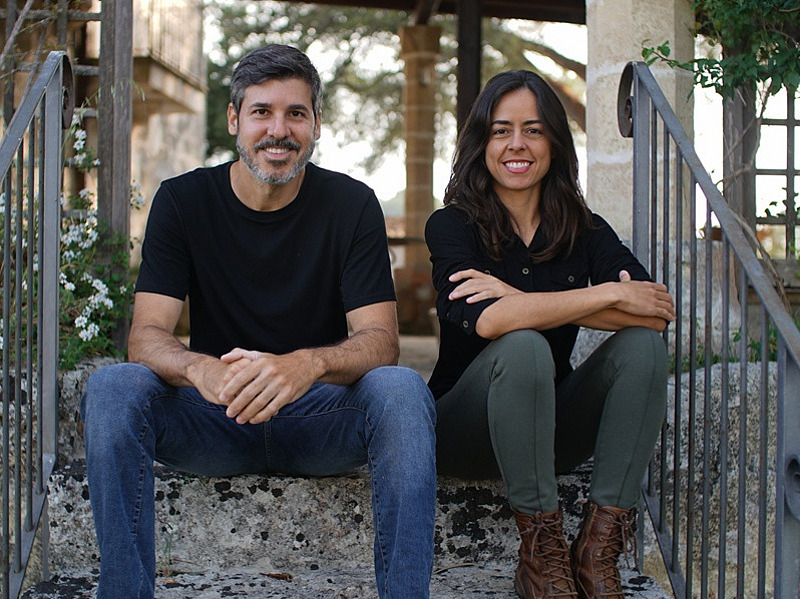
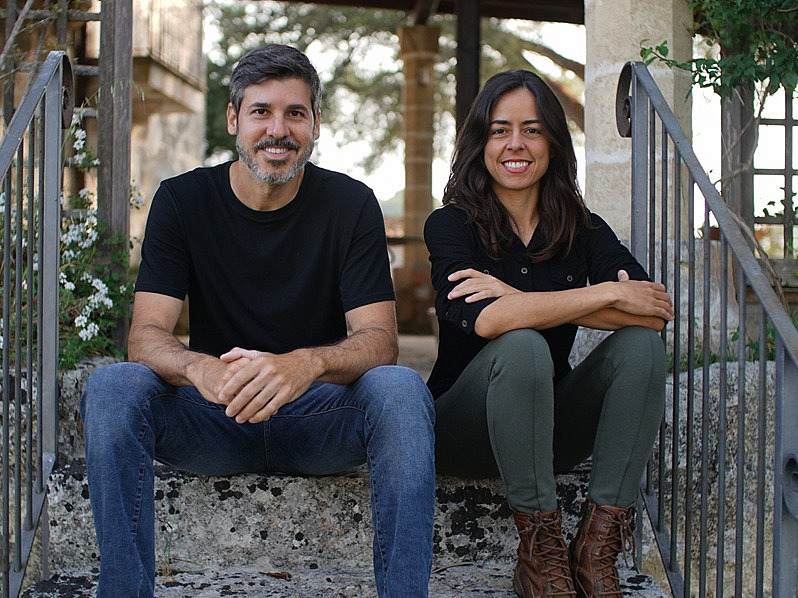
Felipe Pasini and Dayana Andrade are syntropic agriculture specialists with nearly two decades of combined experience in research, field implementation, and education. Felipe Pasini studied Environmental Sciences, while Dayana Andrade holds a PhD in Environmental Sciences and Conservation from the Federal University of Rio de Janeiro. They co-authored the book "Vida em Sintropia", in English "Life in Syntropy" (available in Portuguese, Italian and French). Currently, they work in Portugal on the topic of syntropic agriculture.
Could you shortly explain what syntropic agriculture is? How could it be combined with organic and biodynamic farming?
Dayana Andrade: Syntropic agriculture is a form of agroforestry guided by three principles: stratification (organizing species in layers), ecological succession (organizing species over time), and syntropy (the tendency of living systems to accumulate energy and complexity). While unrelated to anthroposophy, it shares key traits with biodynamic farming: both view the farm as an organism whose health depends on internal interactions and flows. And both reject synthetic inputs like organic farming also does.
What first inspired you to pursue syntropic agriculture, and how has your motivation evolved over the years?
Felipe Pasini: Our interest began after visiting Ernst Götsch's farm in Brazil, the concept's creator. What impressed us was the transformation from degraded pasture to productive forest, and the innovative ecological thinking behind his practices.
Dayana Andrade: Over the years we've moved between research, fieldwork, and outreach. Testing these ideas with our own hands and exposing them to critique has been our way of continuing to learn.
From your perspective, how can syntropic agriculture directly contribute to mitigating or adapting to climate change?
Dayana Andrade: For adaptation, syntropic systems build resilience by maintaining year-round species diversity across multiple layers, permanent soil cover, and photosynthesis-maximizing management. This combination improves water storage, buffers temperature extremes, and reduces crop failure risk. For mitigation, analyses show these systems act as strong carbon sinks. High biomass production, intensive pruning, and lignin-rich litter drive steady increases in soil organic matter and humus. Beyond carbon, complex stratified ecosystems influence water cycles, not just locally but pulling moisture into continents, as the Biotic Pump Theory explains. This is crucial because it means that climate-responsible land use cannot avoid working with ecological complexity.
Can you provide examples from your work where syntropic practices have helped restore degraded land or helped farmers to adapt to climate change?
Felipe Pasini: Latin America, especially Brazil, has many documented examples. In Europe, results are strong in degraded areas. We led a four-year project in southern Italy with measurable improvements. In Spain, the farm project La Loma Viva demonstrates farming under water scarcity, and in Portugal, the farms Mértola and Casa Mendes Gonçalves, where we work currently, are becoming national benchmarks.
How do you measure the long-term adaptability of syntropic systems in different geographic and climate conditions, from Brazil to Europe?
Felipe Pasini: While each climate demands its own species and design, the underlying principles and results are similar. We track rising soil organic matter, stable temperatures at ground level and throughout the canopy, improved water retention, and increased nutrient availability. Over time, irrigation and fertilizer needs decline as systems mature toward self-sustaining stability.
What advice would you give to farmers or policymakers who are hesitant to adopt syntropic practices as a tool for climate change adaptation?
Dayana Andrade: Fear of the new is something to be overcome by learning and testing. Farmers should start small, as the learning curve is steep. Policymakers should seek real innovators implementing disruptive transformations. We can't forget that agricultural practices reflect a collective societal choice. Change demands simultaneous action from all sectors: producers and consumers, rural and urban communities, traditional and academic knowledge, social organizations and governments.
What are your next steps working with syntropic agriculture?
Felipe Pasini: We recently moved to Portugal to collaborate with Casa Mendes Gonçalves, a food company charting transition scenarios for its supply chain. Their six-year-old agroforests show significant potential. Through the Mendes Gonçalves Foundation, we're developing educational materials and contributing to public school agroforestry programs.
Interview: Lin Bautze-Boeke, FiBL