


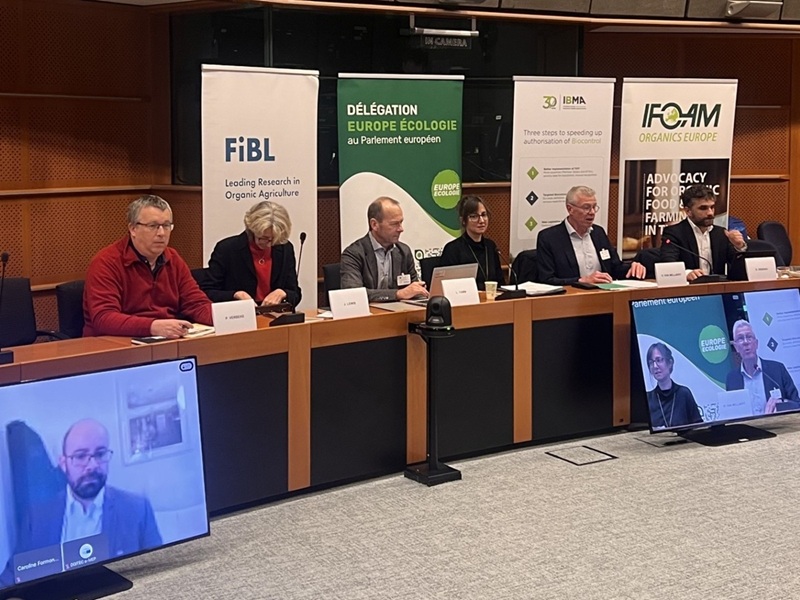
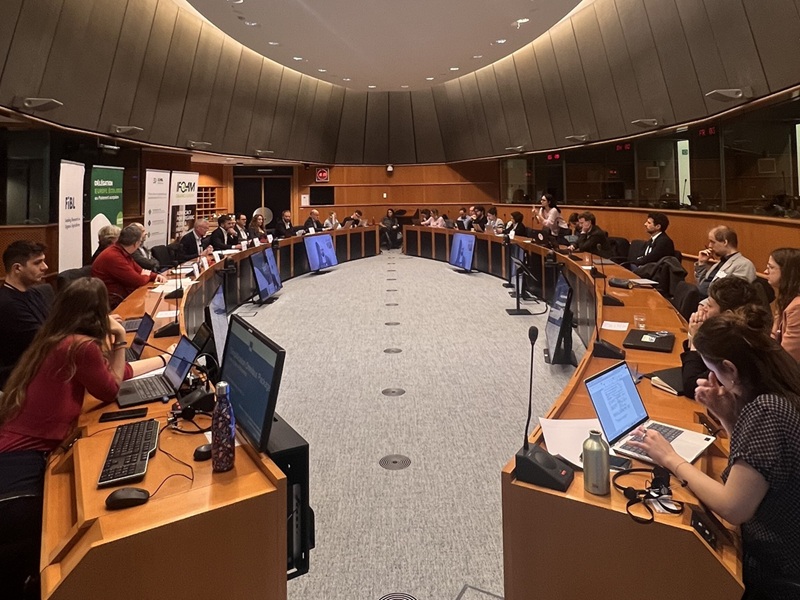
Policymakers, researchers, farmers' representatives and biocontrol innovators met in the European Parliament to discuss the organic approach to biocontrol and its specific needs. The event, co-organised by IFOAM Organics Europe, FiBL and the International Biocontrol Manufacturers Association IBMA, comes very timely as the European Commission is expected to soon propose measures for improving access to biocontrol as it has promised in its Vision for Agriculture and Food.
Aligning EU regulations with innovation in biocontrol
Organic farmers are pioneers in the use of biocontrol, integrating such tools within holistic plant-health strategies and applying them only when necessary. However, current EU risk assessment and approval procedures are largely tailored to synthetic chemical pesticides. This mismatch slows down the evaluation of biocontrol products, restricts market access, and limits the availability of effective solutions.
The event explored how these challenges can be addressed and what policy adjustments are needed to maintain a safe, efficient, and innovation-friendly regulatory environment.
Plant health begins with healthy ecosystems
Stefano Torriani, FiBL's Head of the Department of Crop Sciences, presented how biocontrol is embedded in organic plant-health care. Drawing on FiBL's extensive research and field-level experience, Torriani placed biocontrol in a broader context, reminding the audience that plant health begins with healthy ecosystems, which can be achieved through responsible agronomic practices – as organic farmers demonstrate.
Making biocontrol a cornerstone of European agriculture
The programme also included a presentation of the Commission's regulatory proposal by DG SANTE policy officer Domenico Deserio, political statements from IFOAM Organics Europe and IBMA, and concrete demonstrations of how fruit and potato producers apply biocontrol on the ground. Research perspectives were provided by Agroscope's SCALE-it project and by IBMA member AMOEBA, who discussed ongoing innovation and regulatory hurdles faced by the industry.
All speakers agreed that biocontrol is a central tool for organic farmers. They successfully use it within ecosystem-based plant-health strategies, while the use of biocontrol is expanding across all farming systems. The discussions highlighted broad support for targeted amendments to Regulation (EC) 1107/2009 on plant protection products. The event closed with a strong call for streamlined, science-based regulatory pathways dedicated to biocontrol substances, enabling their broader and faster adoption. It reaffirmed a shared commitment to making biocontrol a true cornerstone of sustainable agriculture in Europe.